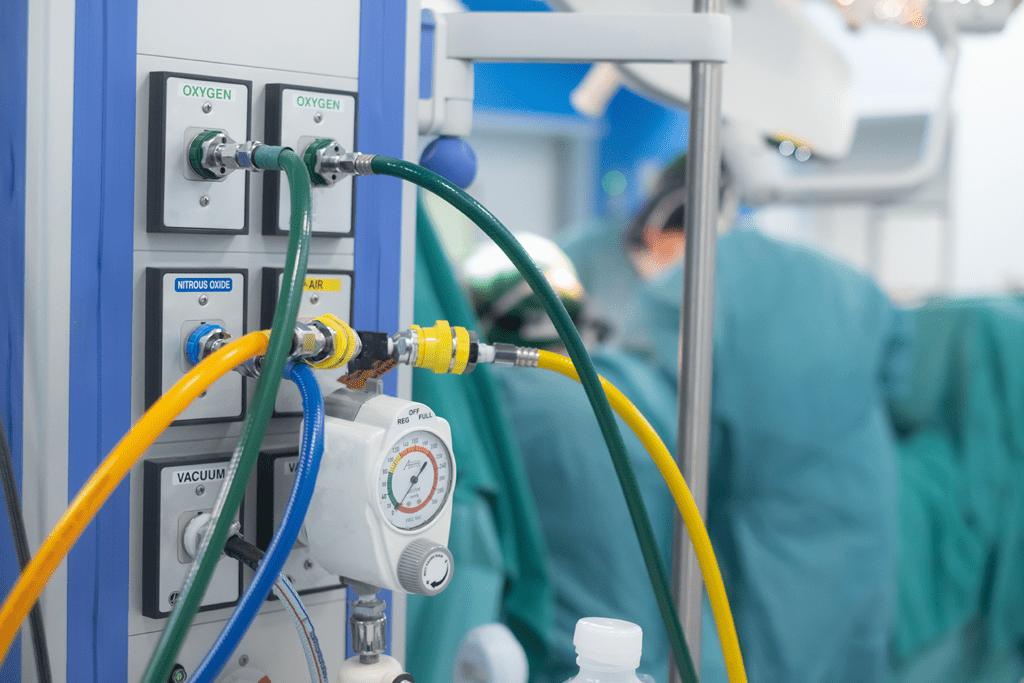

If you have built, modified, or repaired a medical gas system, one step stands between the finished pipework and the first patient who depends on it: an independent medical gas verifier has to test the work and document that it satisfies the applicable verification requirements. NFPA 99, the National Fire Protection Association’s Health Care Facilities Code, requires it, and patient safety demands it.
Here is why. A medical gas system can fail in ways that are invisible from the outside, and the most dangerous of them is a cross-connection, where the piping for two gases is crossed so an outlet quietly delivers the wrong one. A medical gas verifier exists to catch exactly that, before anyone is ever connected to it. This article explains what a verifier does, the ASSE 6030 credential behind the role, when NFPA 99 requires you to hire one, and how to choose an independent verifier for your project, large or small.
What a Medical Gas Verifier Does
A medical gas verifier is an independent, certified professional who performs the final testing of a new or modified piped medical gas and vacuum system before it is placed into service. They are the last quality-control checkpoint between installation and patient use, and they are deliberately separate from whoever installed the work.
A verifier tests and documents that the work holds pressure without leaks, that each outlet in the tested area delivers the correct gas at the required quality, that the piping is clean, and that valves, alarms, and labeling perform as required. Our medical gas verification checklist and our deep dive on ASSE 6030 verification lay out the full test sequence.
The single most important thing on that list is the cross-connection test, and it is worth understanding why. In a cross-connection, the lines for two systems are crossed during installation, so an outlet labeled and intended for one gas actually carries another. A patient who should be receiving oxygen could instead receive medical air, nitrogen, or nitrous oxide. Because the outlet still looks correct and is labeled correctly, the error is invisible without testing, and the consequences can be life-threatening. The verifier catches it by pressurizing one line at a time while every other line sits at atmospheric pressure, confirming that only the intended outlets carry pressure. That single test is a large part of why qualified, independent verification is not optional.
One point of precision: a verifier documents that the tested installation satisfies the applicable verification requirements at the time of testing. They are independent of the installer, and verification does not validate the engineering design, every concealed condition, or future performance. As we explain in Certified vs. Verified, the verifier is certified and the system is verified, and the report reflects what the testing found on that day.
ASSE 6030 Credential Explained
NFPA 99 does not let just anyone verify a system. The verifier must meet ASSE 6030, the Medical Gas Systems Verifier standard within the ASSE 6000 series, administered by the American Society of Sanitary Engineering. The standard applies to any individual who tests and verifies the operation of medical gas and vacuum systems.
The credential is earned, not assumed. In brief, it requires documented practical experience verifying medical gas systems, formal training from a qualified instructor, and passing written and practical examinations, with periodic renewal. For the full breakdown of the requirements and the test sequence a verifier runs, see our dedicated guide to ASSE 6030 verification. When you hire, ask to see a current credential tied to the individual doing the work, a habit we cover in choosing a medical gas provider.
Verification Triggers (New, Modified, Repaired Systems)
Knowing when you are required to hire a verifier is half the battle, because the requirement is easy to overlook on smaller jobs. NFPA 99 requires verification of all components of new piped systems, along with additions, renovations, temporary installations, and repaired systems, before they are placed into service.
The practical rule is this: when piping downstream of the source is opened, altered, or extended, the affected portion has to be tested and verified before it carries gas to patients again. The exact testing depends on the work performed. New or modified piping generally calls for independent ASSE 6030 verification, while some component-level repairs that do not open the piping may call for documented functional testing instead. Work that typically calls for verification includes:
- New construction that includes medical gas or vacuum piping.
- Additions and extensions, such as adding outlets or running a line to a new room.
- Renovations that alter existing piping, which we cover in planning a medical gas system upgrade.
- Repairs that open a line, including the kinds of fixes in our guide to common medical gas system problems.
- Temporary installations set up during a project.
This is exactly where small projects get tripped up. A single cut-in to add a few outlets in an ASC or a dental office feels minor, but the verification requirement is not waived because the job is small. If the line was opened downstream of the source, that work needs to be verified.
Choosing an Independent Verifier
When it is time to hire, a few criteria separate a verifier you can rely on from one who will leave you exposed at your next survey:
- Independence from the installer. This is mandatory under NFPA 99. The verifier cannot be the company that installed the work, because a party testing its own installation has a stake in it passing. The point is taken up further in Who Owns Safety?.
- A current ASSE 6030 credential. Ask to see it, tied to the individual performing the verification.
- Experience with your project type and size. A verifier comfortable with small renovations and additions, not just large hospital builds, will move faster and ask the right questions.
- Quick quote and turnaround. Small projects often run on tight schedules, so a verifier who prioritizes scheduling keeps your timeline intact.
- Clear, complete documentation. The deliverable is a clear verification report documenting each test, its result, and the scope of work verified, organized for review by your Authority Having Jurisdiction (AHJ) and accreditor.
How Compass Cryogenics Helps
Compass Cryogenics can provide or coordinate qualified ASSE 6030 verification for new construction, renovations, additions, and repairs, subject to project scope and independence requirements. The verification covers the NFPA 99 test sequence, including the critical cross-connection test, and the results are documented for review by your AHJ and accreditor. Because verification must be independent of the installation, Compass does not verify work it installed or repaired; in those cases, we coordinate a separate qualified verifier.
Verification needs are not limited to large projects. Whether you are a contractor or a facility manager with a cut-in, an addition, or a repair to put back into service at a single clinic, a hospital, or a multi-building campus, we can help you arrange independent verification on a schedule that keeps your project moving. You can see our full medical gas verification service, and if your project also involves the installation, our system installation and upgrades team can help there too, in which case the verification is performed by a separate, independent ASSE 6030 verifier. We serve healthcare facilities across New England, the Mid-Atlantic, and select Midwest markets, scheduling around your project to keep disruption to a minimum.
Frequently Asked Questions
What does a medical gas verifier do?
A medical gas verifier independently tests a new or modified piped medical gas and vacuum system before it is placed into service, documenting that the tested work holds pressure, delivers the correct gas at each outlet, is clean, and alarms correctly at the time of testing. They are the final quality-control checkpoint between installation and patient use. Our medical gas verification checklist details the full process.
When do I need to hire a medical gas verifier?
Verification is generally required whenever you install, add to, renovate, or temporarily install medical gas piping, and when a repair opens or modifies the piping, before that work goes into service. The rule of thumb is that verification follows any cut-in, piping repair, or addition downstream of the source, even on a small renovation that alters only part of a system.
What credential should a medical gas verifier hold?
A qualified verifier holds a current ASSE 6030 credential, the Medical Gas Systems Verifier standard required by NFPA 99. Ask to see it, tied to the person doing the work. Our guide to ASSE 6030 verification explains what the credential requires, and Certified vs. Verified clarifies the related terminology.
Why can’t my installer verify their own work?
NFPA 99 requires the verifier to be independent of the installer, because a company testing its own installation has an interest in it passing. An independent verification removes that conflict, which is what makes the report trustworthy to your AHJ and accreditor.
What is a cross-connection and why does it matter?
A cross-connection is when the piping for two gases is crossed during installation, so an outlet delivers a gas other than the one it is labeled for, such as air or nitrogen instead of oxygen. The error is invisible from the outside and can be life-threatening, which is why a verifier’s cross-connection test, isolating each line in turn, is one of the most important parts of verification.
Need an independent verifier for a renovation, addition, or repair? Compass Cryogenics can provide or coordinate qualified ASSE 6030 verification, independent of your installer and subject to project scope, with documented results organized for your AHJ and accreditor. To scope a quote, send us your facility address, the systems and gases involved, and the approximate number of outlets and inlets affected. Hire a verifier or request a quote, call us at (888) 833-2796, or drop us a line through the contact form on this page.