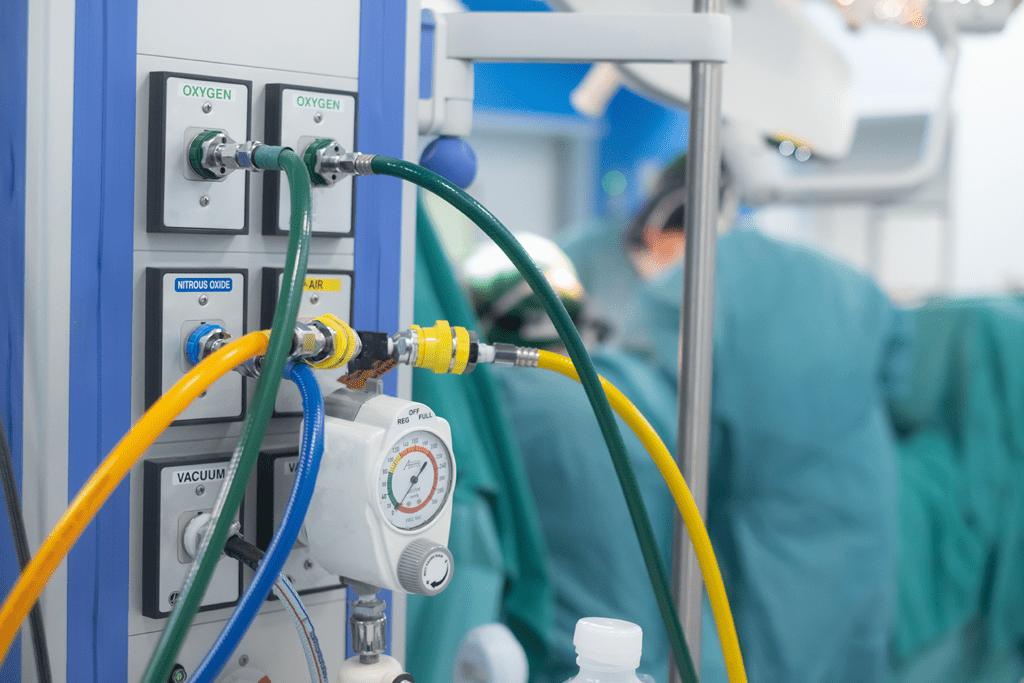
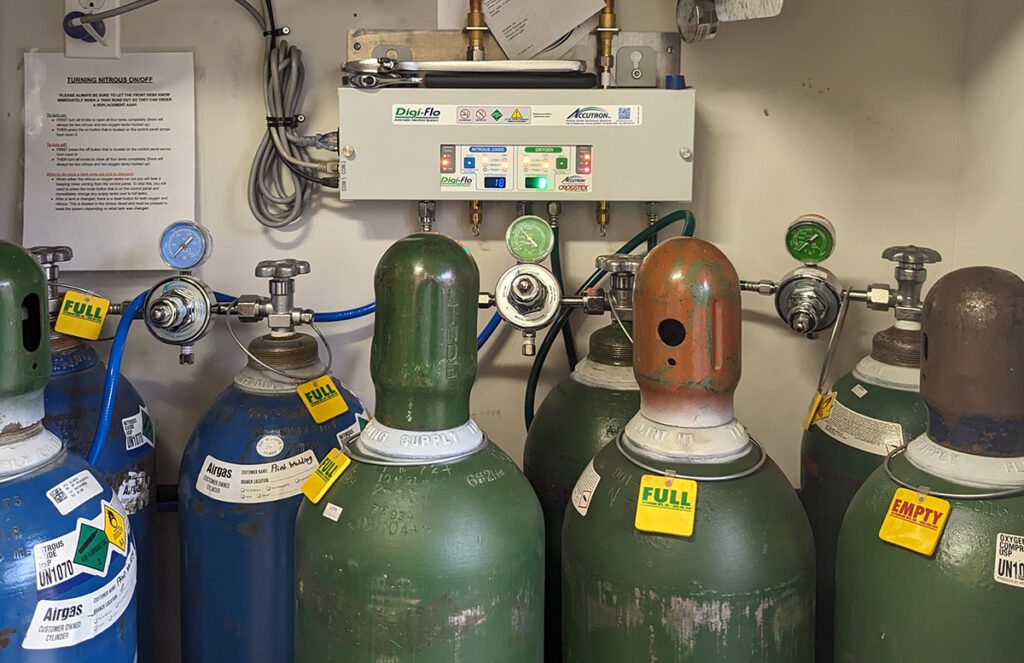
Medical gas alarms are the warning system that stands between a gas supply problem and a patient. Installing them correctly, whether you are retrofitting an aging panel or adding alarm coverage to a new anesthetizing area, is governed by detailed NFPA 99 requirements that reach well beyond mounting a box on a wall. The panels, their sensors, the wiring, and the power that keeps them running when the lights go out are all spelled out in the code.
For the facility managers replacing dated panels and the ASCs adding procedure or anesthetizing rooms, this article covers what a compliant installation involves: the three alarm types and where each belongs, the NFPA 99 wiring and power requirements, sensor placement best practices, and the verification that any new or modified alarm requires before it goes into service.
Master, Area & Local Alarm Types
A medical gas system uses three kinds of alarms, and a proper installation has to account for each where it applies.
- Master alarms monitor the source of supply, the reserve source, and the main-line pressures for the entire facility. NFPA 99 requires at least two master panels, one in the office of the person responsible for maintaining the system and one in a continuously staffed location. Our guide to master alarm panel testing covers them in depth.
- Area alarms monitor the line pressure of the systems serving a specific patient care area, and NFPA 99 requires them in anesthetizing locations and critical care areas. They are independent of the master panels, signaling only within their area, as we explain in area alarm panel requirements.
- Local alarms monitor individual source equipment, such as medical air compressors, vacuum pumps, and manifolds, and are located at or near that equipment. A signal from the source equipment also relays up to the master alarm, so a local condition is visible facility-wide.
Knowing which alarms a space requires is the first design decision in any installation or retrofit, and it is driven by the rooms being served and their risk category.
NFPA 99 Wiring & Power Requirements
This is where alarm installation becomes specialized work rather than general electrical, because NFPA 99 is specific about how the panels signal and how they stay powered:
- Separate visual indicators: Each monitored condition gets its own labeled visual indicator, so staff can see exactly what is wrong rather than only that something is. Each indicator and each panel must be labeled for what it monitors.
- Cancelable 80 dB audible: Each alarm condition produces a cancelable audible signal of at least 80 decibels at 3 feet (914 mm), and the audible must reinitiate if a new condition occurs while an earlier one is silenced, so silencing one alarm can never mask the next.
- Life-safety-branch power: Master and area alarms, along with their sensors and switches, are powered from the life safety branch of the essential electrical system, so they keep working through a power event. Local alarms may be powered from the same branch as the air compressor they monitor.
- Automatic restart after a power loss: The alarms must automatically restart after a brief power loss, such as during generator startup, without giving false signals or requiring a manual reset.
- Wiring integrity for master panels: Master alarm panels must be wired independently, so that a fault in one panel or circuit cannot disable signals at the other.
These requirements exist so that the alarm is dependable precisely when conditions are at their worst, which is exactly when a supply problem is most likely.
Sensor Placement Best Practices
A panel is only as accurate as the pressure its sensors actually see, so placement is one of the most important parts of an installation to get right the first time.
For area alarms in critical care areas, the sensors are installed on the patient, or use, side of each individual zone valve, so the alarm reflects the pressure delivered to the area. For anesthetizing locations, NFPA 99 generally allows the sensors either on the source side of a group of anesthetizing-location zone valves on the same branch line or on the patient side of each individual zone valve. Master alarm switches and sensors are located at the source equipment, where they can monitor the source condition and main-line pressure. In all cases, sensors should be installed so they are removable and positioned to permit access for testing.
Because placement is tied to the zone valve serving each area, coordinating the alarm layout with the piping design matters. A sensor installed in the wrong location is the kind of finding that is cheap to prevent during installation and expensive to correct afterward, which is why it is worth confirming against the design before the walls close up. More detail on area alarm placement is in our area alarm panel requirements guide.
Verification After Installation
An alarm installation is not finished when the panel is mounted. Because new or modified alarm work is part of a new or modified system, NFPA 99 requires the affected portion to be verified by an independent ASSE 6030 verifier before the system is placed into patient service.
During that verification, the verifier does more than confirm the panel lights up. They simulate the actual fault conditions to confirm each alarm activates at its true setpoint through the real sensor, and they confirm the audible and visual signals, the sensor placement, the labeling, and the power and restart behavior. Critically, the verifier has to be independent of whoever installed the work, for the same reason we explain in Certified vs. Verified: a party testing its own installation has a stake in it passing. You can read more about the process in our guides to medical gas verification and hiring a verifier.
The bottom line is that the alarms, and the system, cannot go into service until they are verified and documented. An installation is done when it is verified, not when it is wired.
How Compass Cryogenics Helps
Compass Cryogenics is built for exactly this kind of work: alarm-panel retrofits and upgrades in hospitals, medical office buildings, and dental and veterinary practices, and adding alarm coverage when an ASC builds out a new procedure or anesthetizing room. We install and retrofit master, area, and local alarm panels to NFPA 99, with correct separate visual indicators, 80 decibel audible signals, life-safety-branch power and automatic restart, and properly placed sensors. Aging or discontinued panels are a common reason facilities call us, and our installation and upgrades team handles the retrofit from planning through installation, coordinated around your clinical schedule.
Because NFPA 99 requires verification to be independent of the installer, we keep those roles separate. For alarm work installed by others, Compass can provide or coordinate qualified, independent verification, subject to project scope and independence requirements. For alarm work we install, verification is completed by a separate, independent ASSE 6030 verifier that we can help coordinate. After the install is verified, we can fold your alarms into ongoing routine safety inspections so they stay tested and documented year to year. We serve hospitals, ambulatory surgery centers, medical office buildings, and dental and veterinary practices across New England, the Mid-Atlantic, and select Midwest markets, scheduling around your operations to keep disruption to a minimum.
Frequently Asked Questions
What are the three types of medical gas alarms?
Master alarms monitor the source and main-line pressures for the whole facility, area alarms monitor the line pressure of a specific patient care area, and local alarms monitor individual source equipment like compressors and vacuum pumps. A compliant installation accounts for each where it applies, as covered in our master alarm panel testing guide.
What does NFPA 99 require for alarm power and wiring?
Master and area alarms, sensors, and switches must draw power from the life safety branch of the essential electrical system and automatically restart after a brief power loss without false signals. Each condition needs its own labeled visual indicator and a cancelable audible of at least 80 decibels at 3 feet, and master panels must be wired so a fault at one cannot disable the other. Our master alarm panel testing guide covers panel behavior in detail.
Where do medical gas alarm sensors go?
Area alarm sensors for critical care areas go on the patient, or use, side of each individual zone valve, while anesthetizing locations may use sensors on the source side of a group of zone valves or the patient side of each individual valve. Master alarm sensors sit at the source equipment. Placement is tied to the zone valve serving each area and should be confirmed against the design.
Do new or upgraded alarms need verification?
Yes. New or modified alarm work is part of a new or modified system, so NFPA 99 requires the affected portion to be verified by an independent ASSE 6030 verifier, with testing matched to the scope of the work, before it goes into patient service. The verifier confirms the alarms activate at their true setpoints and must be independent of the installer.
Can you retrofit just the alarm panels in our existing system?
Yes. Alarm-panel retrofits and upgrades are common, whether you are replacing aging or discontinued panels or adding coverage for a new anesthetizing area, and they are well within a focused installation and upgrade scope. The modified portion is then verified by an independent verifier before it returns to service.
Replacing aging alarm panels or adding alarm coverage for a new procedure room? Compass Cryogenics handles alarm-panel retrofits and upgrades to NFPA 99, coordinates independent verification of the finished work, and can keep your alarms on a documented testing schedule afterward. Send us your facility address, the panels you have now, and the rooms you are adding, and we can scope the work. Request an alarm installation quote, call us at (888) 833-2796, or drop us a line through the contact form on this page.