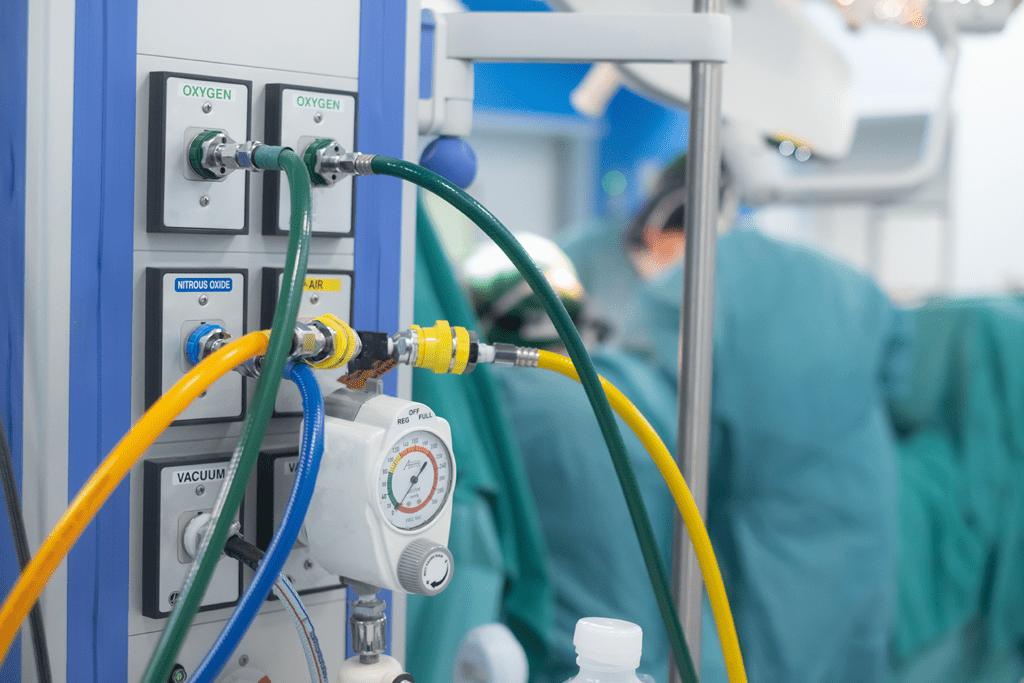

The master alarm panel is the facility-wide early-warning system for your medical gas supply. It watches the source equipment and the main-line pressures and sounds the alarm the moment something drifts out of range, ideally long before a supply problem ever reaches a patient. It is one of the most important safety devices in the building, and also one of the most commonly misunderstood when it comes to testing.
Here is the heart of the matter: an alarm only protects you if it actually fires when it should, and pressing the test button is not the same as proving the alarm will trigger at the right condition. For the biomedical engineers and facility managers responsible for these systems, this article explains what a master alarm panel monitors, the NFPA 99 two-panel location rule, the crucial difference between push-button and actual activation testing, and how often master alarms should be tested.
What a Master Alarm Panel Monitors
Medical gas systems use three kinds of alarms, and it helps to keep them straight. Local alarms monitor individual equipment, area alarms monitor pressure in specific patient care zones, and master alarms monitor the system at the facility level. This article is about the master alarms.
Under NFPA 99, the National Fire Protection Association’s Health Care Facilities Code, a master alarm system monitors the operation and condition of the source of supply, the reserve source where one exists, and the pressure in the main lines of each medical gas and vacuum piping system. In practice, that means it watches:
- Source and supply status, including changeover from the primary to the secondary source and a low reserve condition.
- Main-line pressure, activating when the pressure deviates 20 percent from normal operating pressure, whether high or low.
Each condition produces both an audible and a visual signal, and NFPA 99 is specific about how they behave. The audible signal must be cancelable, meaning staff can silence it, and it must produce a minimum of 80 decibels at 3 feet (914 mm). The visual indication stays on until the condition is corrected. The code also requires that the audible signal reinitiate if a new alarm condition occurs while an earlier one is silenced, so silencing one alarm can never mask the next, and that the alarms draw power from the life safety branch of the essential electrical system so they keep working through a power event. These behaviors are part of why alarm function is checked during a medical gas safety inspection and during verification.
Two-Panel Location Rule
NFPA 99 requires at least two master alarm panels, and the requirement is about location as much as quantity. The panels have to be placed so that an alarm condition is never missed, which means:
- One panel in the office or workspace of the person responsible for maintaining the system, typically the facility management or biomedical engineering office.
- One panel in a location that is continuously staffed while the facility operates, such as a security desk or telephone switchboard that is attended around the clock.
Depending on the adopted edition and your AHJ, a properly configured building automation system may be able to serve as one of the two panels under specific conditions. Both panels display the same signals, and the point of the redundancy is continuous coverage: a problem with the oxygen supply at two in the morning still reaches someone who can act on it.
That second location raises a practical issue worth planning for. The 24-hour panel is often watched by security or switchboard staff who are not medical gas specialists, so clear labeling and a known response procedure matter. NFPA 99 requires each indicator and each panel to be labeled for what it monitors, and your facility should make sure whoever is watching knows what action each alarm calls for. Our guide to Joint Commission medical gas compliance covers how these alarm requirements fit into Joint Commission expectations, which for hospitals now sit in the Physical Environment chapter.
Push-Button vs. Actual Activation Testing
This is the distinction that separates real alarm testing from a false sense of security.
- Push-button test: Pressing the panel’s test button confirms that the indicator lamps light and the audible sounds, and on digital panels it can confirm the displayed setpoints. It proves the panel’s annunciation works.
- Actual activation test: Creating the real condition, such as simulating a 20 percent main-line pressure deviation or a source changeover, to confirm the alarm actually triggers at its true setpoint through the real sensor or pressure switch. Because it can set off alarms in staffed areas and, for some conditions, involves source equipment, an actual activation test is coordinated with facility staff in advance and performed within the agreed scope so patient supply is not disrupted.
The difference is not academic. A push-button test can pass while the underlying sensor or pressure switch has failed or drifted out of calibration, which means the alarm would not activate in an actual event. Put plainly, the button tests the messenger, while the activation tests whether the message will ever be sent. Only an actual activation test verifies the true setpoint, the difference between confirming a panel lights up and confirming it will warn you when your oxygen pressure genuinely drops. An alarm that fails this kind of test is exactly the sort of issue covered in our rundown of common medical gas system problems.
Recommended Test Frequencies
NFPA 99 and Joint Commission requirements leave exact intervals to your facility’s policy, informed by manufacturer guidance, applicable state or AHJ requirements, and your documented maintenance strategy. A common approach has two tiers:
- Routine checks: A push-button test between inspections, confirming the audible and visual signals operate, along with the displayed setpoints on digital panels.
- Periodic activation testing: An actual activation test, coordinated with facility staff, confirming the master alarms trigger at their true setpoints, often folded into a scheduled medical gas inspection.
Whatever intervals you set, document them and follow them consistently, because a surveyor evaluates your testing against your own written policy. Missing alarm-test records can lead to survey findings, so the documentation matters as much as the test itself. Our guide to medical gas risk assessment explains how system categories are determined, which is separate from the maintenance strategy behind your testing intervals, and these checks slot naturally into a routine safety inspection.
How Compass Cryogenics Helps
Compass Cryogenics tests master alarm panels the way they are meant to be tested. We do not just press the button. Within the agreed scope, and coordinated with your facility staff, our technicians test true setpoints, creating the actual conditions to check that the master alarms activate at the correct main-line pressures and source events, and we check that both panels annunciate audibly, at the required 80 decibels at 3 feet, and visually. Results are documented in digital and printable survey-ready reports organized for your compliance and accreditation records.
We can fold master alarm activation testing into your annual medical gas safety inspection, test alarm function as part of independent verification of new or modified systems that Compass did not install, and handle alarm and monitoring system repairs when a panel or sensor needs attention. We serve hospitals, ambulatory surgery centers, dental and veterinary practices, and multi-site groups across New England, the Mid-Atlantic, and select Midwest markets, scheduling around your operations to keep disruption to a minimum.
Frequently Asked Questions
What does a master alarm panel monitor?
Under NFPA 99, a master alarm system monitors the source of supply, the reserve source, and the pressure in the main lines of each medical gas and vacuum system for the whole facility. It activates when main-line pressure deviates 20 percent from normal or when a source condition such as a changeover occurs. Alarm function is tested, within the agreed scope, during a routine safety inspection.
How many master alarm panels does NFPA 99 require?
At least two: one in the office or workspace of the person responsible for maintaining the system, and one in a location that is continuously staffed while the facility operates, such as a security desk or switchboard. In some cases, a properly configured building automation system can serve as one of the two. Our guide to Joint Commission medical gas compliance covers how this fits Joint Commission requirements.
What is the difference between push-button and actual activation testing?
A push-button test confirms the panel’s lamps and audible signal work. An actual activation test creates the real condition, such as a 20 percent pressure deviation, to confirm the alarm triggers at its true setpoint through the actual sensor. A panel can pass the button test while a failed sensor would not activate in a real event, which is why true setpoint testing matters. Alarm failures of this kind are covered in our guide to common medical gas system problems.
How often should master alarms be tested?
A common approach pairs routine push-button tests with periodic actual activation testing, with the exact intervals set by your facility’s documented maintenance policy, manufacturer guidance, and applicable accreditation and AHJ requirements. Whatever you choose, document it and follow it. A risk assessment determines your system categories, which shape the alarm requirements that apply to each system.
How loud must a master alarm be?
NFPA 99 requires a cancelable audible indication of at least 80 decibels at 3 feet (914 mm), along with a visual indication that remains until the condition is corrected. The audible must also reinitiate if a new condition occurs while an earlier alarm is silenced. These behaviors are checked during verification and inspection.
Want master alarm testing that confirms true setpoints, not just that the lights work? Compass Cryogenics performs actual activation testing of your master alarm panels within the agreed scope, coordinated with your staff, checks that both panels signal correctly, and documents the results for your compliance and accreditation records. Schedule alarm testing or request a quote, call us at (888) 833-2796, or drop us a line through the contact form on this page.