When you install or renovate a medical gas system, you cannot simply turn it on. Before patients rely on a single outlet, NFPA 99, the National Fire Protection Association’s Health Care Facilities Code, requires the new or modified system to be tested and verified by an independent third party. That third party has to hold an ASSE 6030 credential, and they cannot be the company that installed the work.
For contractors, facility managers, and the ambulatory surgery centers (ASCs) and dental offices taking on renovations, this is a step that is easy to underestimate and impossible to skip. This article explains what ASSE 6030 certification actually means, when verification is required, the test sequence a verifier runs, and why independence from the installer is mandatory.
What ASSE 6030 Certification Means
First, a point of precision that the medical gas field takes seriously: ASSE 6030 is a certification held by a person. The verifier is certified; the system they test is verified. As we explain in Certified vs. Verified, people get certified and systems get verified, and ASSE 6030 sits exactly at that distinction.
ASSE 6030 is the Medical Gas Systems Verifier standard within the ASSE 6000 series, administered by the American Society of Sanitary Engineering. The standard applies to any individual who tests and verifies the operation of medical gas and vacuum systems. Earning the credential is demanding, which is part of why an ASSE 6030 verification carries weight:
- Formal training, delivered by a qualified, certified instructor.
- Documented practical experience in the verification of medical gas piping systems.
- Written and practical examinations, including demonstrating the proper use of test equipment.
The credential also requires periodic renewal. It is distinct from the ASSE 6010 installer and ASSE 6020 inspector credentials, a difference worth understanding when you are choosing a medical gas provider.
When Verification Is Required
NFPA 99 is clear about the trigger. All components of new piped systems, along with additions, renovations, temporary installations, and repaired systems, must be tested before being placed into service. In practical terms, the work that typically calls for ASSE 6030 verification includes:
- New construction that includes medical gas or vacuum piping.
- Renovations and additions that alter an existing system, even if only a section of pipeline is changed, in which case the affected portion is verified. Our guide to planning a medical gas system upgrade covers where verification fits in a project.
- Temporary installations, such as a temporary supply set up during a larger project.
- Repaired systems, where a line has been opened and repaired before being returned to service. The testing required depends on the work performed: repairs that open or modify piping generally call for verification of the affected portion, while some component-level repairs may call for documented functional testing instead. See our rundown of common medical gas system problems for context.
This is not just a large-hospital requirement. ASCs, dental offices, and medical office buildings that modify a piped system are generally held to the same independent verification requirement, subject to the code edition and rules adopted by their AHJ. Veterinary clinics are not governed by NFPA 99 in the same way as human healthcare facilities, but its verification requirements may be used as a voluntary benchmark when a system is modified. Our broader medical gas verification guide walks through the when and why in more detail.
The Verifier’s Test Sequence
A verification is a defined sequence of tests, run in a logical order, that together document whether the tested installation satisfies the applicable verification requirements at the time of testing. While the exact protocol follows NFPA 99 and the project scope, the core tests an ASSE 6030 verifier performs include:
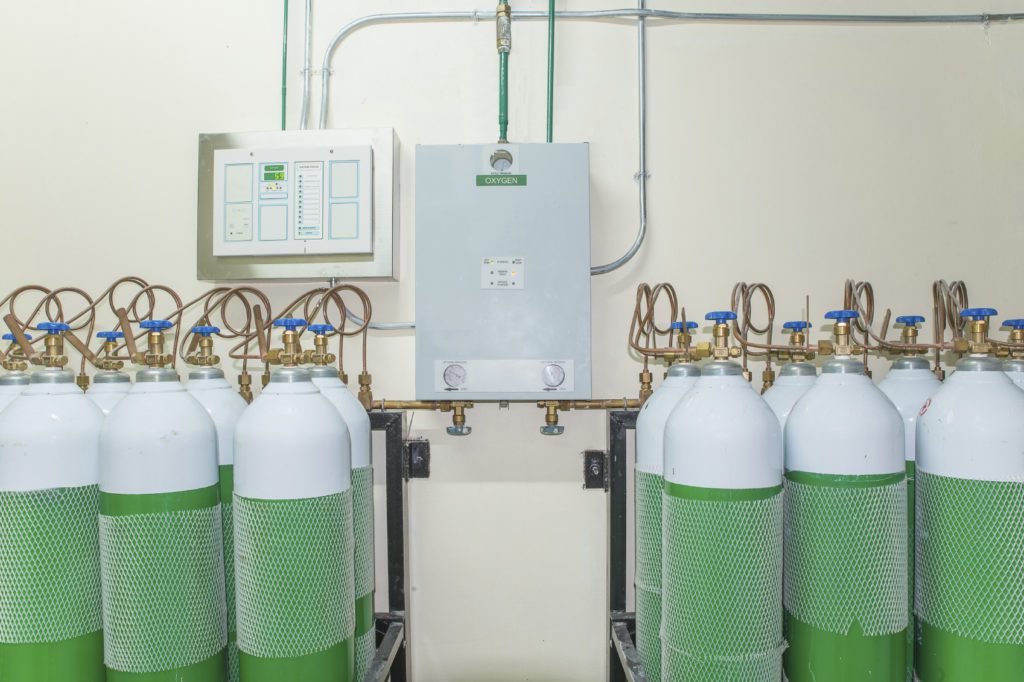
- Standing pressure test: Each piped system is pressurized and held over time to confirm it maintains pressure with no leaks at joints or connections.
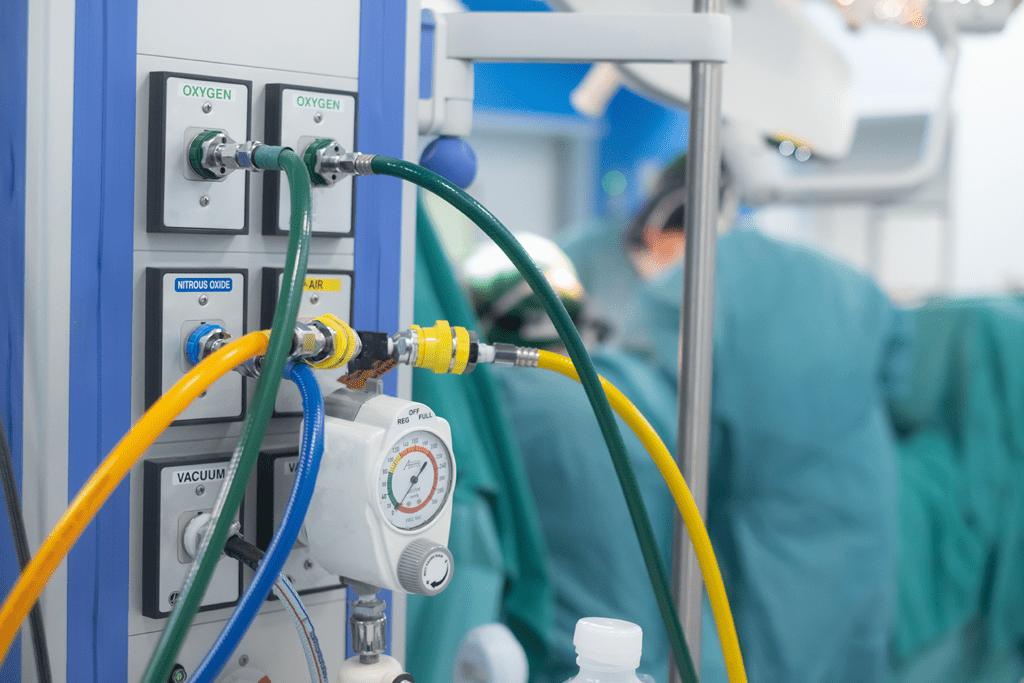
- Cross-connection test: Each gas and vacuum line is tested in isolation, pressurized while all others sit at atmospheric pressure, to confirm that each outlet in the work being verified delivers only the gas it is labeled for and that no lines are crossed.
- Particulate test: A measured flow is discharged from outlets through a filter to confirm the interior of the piping is clean and free of debris that could otherwise reach a patient.
- Purge test: The lines are purged to clear any particulate or residual contaminants introduced during installation.
- Gas purity test: The gas at the outlets is analyzed for purity, including moisture, contaminants, and correct concentration, to confirm the system delivers gas at the required quality.
- Alarm test: Master, area, and local alarms are checked by simulating fault conditions to confirm they signal audibly and visually when pressure varies or a source changes over.
A complete verification also confirms operational pressure and flow at the outlets, proper zone valve operation and isolation, and accurate labeling throughout. For the full checklist of what a verifier confirms, see our medical gas system verification checklist and our deep dive on zone valve inspection.
Why Independence From the Installer Is Mandatory
This is the requirement that gives verification its meaning. NFPA 99 mandates that the verifier be a separate party from the installer. The final verification cannot be performed by the contractor who installed or modified the system.
The reason is straightforward. A company testing its own installation has an interest in that work passing. An independent verifier has no such stake, so the result reflects what the testing actually found, not what anyone hoped it would find. That independence is what makes the verification report something an Authority Having Jurisdiction (AHJ) and an accreditor can rely on, and it is ultimately what protects patients. We take up the broader question of who carries which responsibility on a project in Who Owns Safety?.
For contractors, the practical implication is simple: if you installed the work, you cannot self-verify it. You need to bring in an independent ASSE 6030 verifier to test and document the system before it goes into service. In plain terms, independence is not a formality. It is the entire point.
How Compass Cryogenics Helps
Compass Cryogenics can provide or coordinate qualified ASSE 6030 verification, subject to project scope and independence requirements. When you install or renovate a system, the verifier runs the NFPA 99 verification sequence, standing pressure, cross-connection, particulate, purge, gas purity, and alarm testing, plus operational and labeling checks, and documents the results for review by your AHJ and accreditor. Because verification must be independent of the installation, Compass does not verify work it installed or repaired; in those cases, we coordinate a separate qualified verifier.
Verification needs are not limited to large projects. Whether you manage an ASC, a dental practice, a medical office building, or a hospital department that has modified a system, we can help you arrange independent verification on a timeline that keeps your project moving. You can see our full medical gas verification service, and if your project also involves the installation itself, our system installation and upgrades team can help there too, in which case the verification is performed by a separate, independent ASSE 6030 verifier. We serve healthcare facilities across New England, the Mid-Atlantic, and select Midwest markets, scheduling around your timeline to keep disruption to a minimum.
Frequently Asked Questions
What is ASSE 6030 verification?
It is the independent, third-party testing of a new or modified medical gas system by a certified Medical Gas Systems Verifier, required by NFPA 99 before the system is placed into service. Through a defined sequence of tests, the verifier documents whether the tested installation satisfies the applicable verification requirements at the time of testing. Our medical gas verification guide covers the process end to end.
What does it take to become an ASSE 6030 verifier?
A candidate must complete formal training from a qualified instructor, document practical experience verifying medical gas piping systems, and pass written and practical examinations. The credential must also be renewed periodically. The distinction between this and other credentials matters, as we explain in Certified vs. Verified.
When do I need an ASSE 6030 verification?
Verification is generally required for new piped medical gas systems, additions, renovations, and temporary installations, and for repairs that open or modify the piping, before the work goes into service, regardless of facility size. The exact testing depends on the work performed and the code edition your AHJ enforces. Even a renovation that alters only part of an existing system requires verification of the affected work.
Can my installer verify their own work?
No. NFPA 99 requires the verifier to be independent of the installer, because a party testing its own installation has a stake in it passing. An independent verification removes that conflict, which is what makes the report trustworthy to your AHJ and accreditor.
What tests does the verifier perform?
The core sequence includes standing pressure, cross-connection, particulate, purge, gas purity, and alarm tests, along with operational pressure and flow checks, zone valve operation, and labeling verification. Together they document that the tested work holds pressure, delivers the correct gas at the required quality, and alarms correctly at the time of testing.
Planning an installation or renovation that needs independent verification? Compass Cryogenics can provide or coordinate qualified ASSE 6030 verification, independent of your installer and subject to project scope, with documented results organized for your AHJ and accreditor. To scope a quote, send us your facility address, the systems and gases involved, and the approximate number of outlets and inlets in the new or renovated area. Schedule a verification or request a quote, call us at (888) 833-2796, or drop us a line through the contact form on this page.