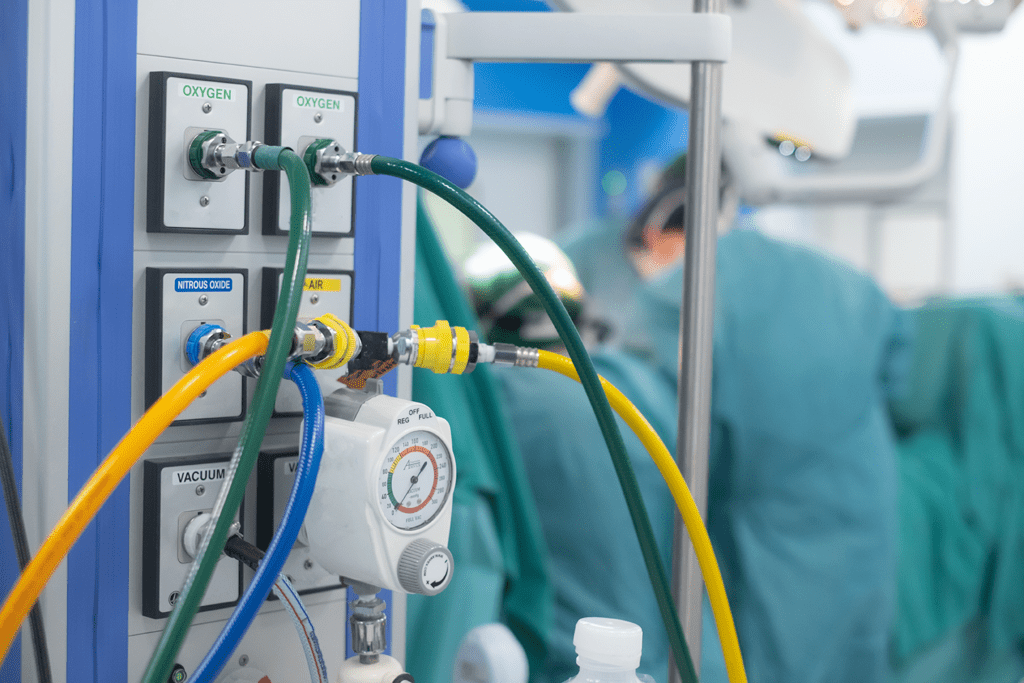
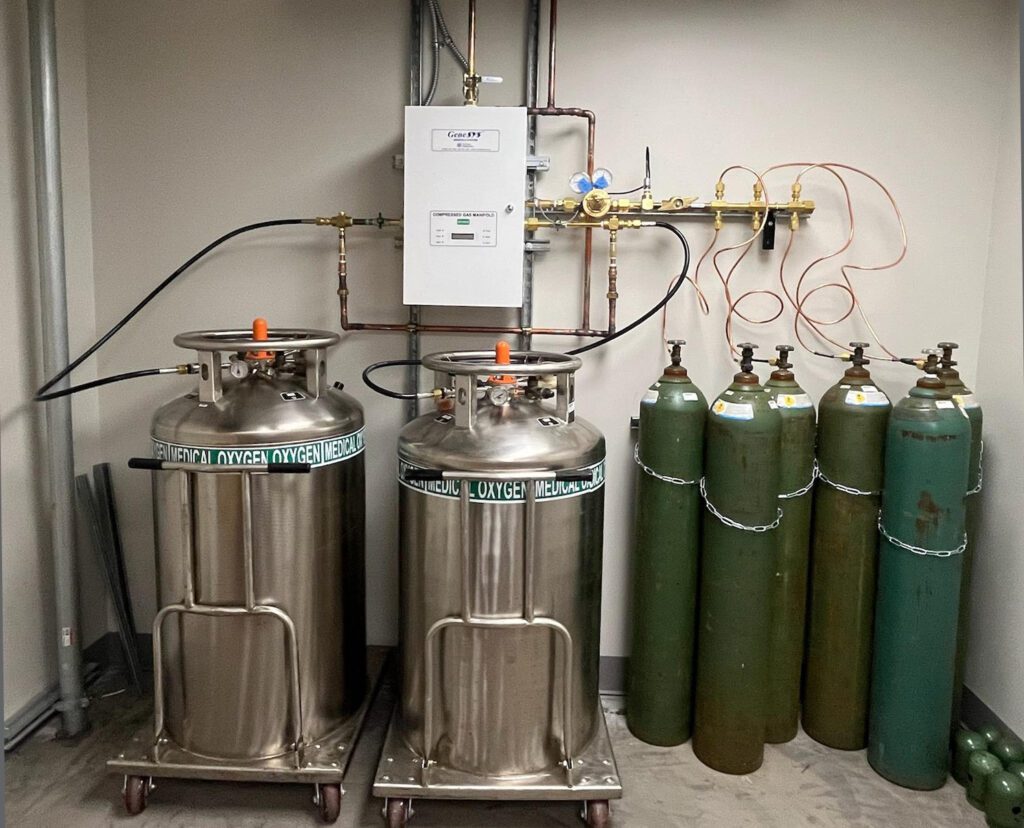
Every hospital’s medical gas system is a critical lifeline that delivers essential gases like oxygen, medical air, and vacuum suction to patients. Over time, these systems age and may struggle to meet growing demands or updated safety codes. Planning a medical gas system installation or upgrade is a complex but necessary endeavor to ensure patient safety, code compliance, and reliable service. This guide provides a technical yet accessible overview of how to evaluate your facility’s needs, navigate the upgrade process, stay compliant with regulations, and minimize downtime – all while keeping patient care uninterrupted. By understanding the key considerations and steps involved, healthcare facility managers can upgrade their medical gas infrastructure with confidence and establish a safer, more resilient system for the future.
Signs Your Facility’s Gas System Needs an Upgrade
How do you know it’s time to upgrade or expand your facility’s medical gas system? Below are some common indicators that an upgrade may be warranted:
- Aging Equipment and Infrastructure: Most source equipment (like medical air compressors, vacuum pumps, and medical gas manifolds) have a useful life of about 10–20 years. Many hospitals continue running systems well past their “use-by” date, which increases the risk of failures. An older system (e.g. decades old) may desperately need to be upgraded to avoid breakdowns that could endanger patients or halt operations.
- Frequent Repairs or Performance Issues: If your maintenance team is constantly fixing leaks, replacing parts, or addressing pressure alarms, it’s a red flag. The threat of equipment failure and unplanned downtime tends to loom as systems deteriorate. Repeated problems or difficulty maintaining stable pressure levels mean the system’s reliability is compromised.
- Capacity Constraints or Facility Expansion: Consider whether your current gas supply keeps up with demand. For example, adding new ICU beds, surgical suites, or a critical care unit might strain an undersized system. Many facilities realized during the COVID-19 pandemic that their piping and supply capacity were not adequate for surges in oxygen use. If you’ve experienced low pressure in peak usage or are planning to expand services, an upgrade or redesign is likely needed to boost capacity.
- Outdated Code Compliance: Medical gas codes and standards (e.g. NFPA 99: Health Care Facilities Code) evolve over time. Older systems may lack required safety features or documentation. For instance, the latest 2024 edition of NFPA 99 now requires auxiliary connection points on all medical gas and vacuum systems for emergency supply hookup – something older installations won’t have. If your system was built under outdated codes, it may not meet more current requirements for alarms, valve placements, or pipeline markings, which is both a safety and compliance issue.
- Reliability and Safety Concerns: Any history of major gas supply disruptions, critical alarms, or unsafe conditions (e.g. contaminated lines, insufficient backups) should prompt an evaluation. A lack of redundancy – such as having only a single source with no backup manifold or reserve – is a vulnerability that modern systems avoid. Upgrading can introduce better redundancy (e.g. secondary vacuum pumps or emergency oxygen reserves) to ensure continuous operation even if one component fails. In short, patient safety considerations should drive upgrades – no facility wants to risk a scenario where life-supporting gas supply is compromised.
If one or more of these signs are present, it’s time to start planning for a medical gas system upgrade. Proactively addressing issues before a failure occurs will protect patient health and keep your hospital or surgical clinic in regulatory compliance.
Key Steps in the Installation/Upgrade Process
Upgrading a medical gas system in a hospital requires careful coordination and adherence to strict procedures. Below is an overview of the key steps in the installation or upgrade process from start to finish:
- Needs Assessment and Initial Planning: Begin with a thorough assessment of your current system and future needs. This involves evaluating the condition and capacity of existing pipes, outlets, source equipment, and alarm systems. Determine what needs to be replaced or expanded – for example, adding new gas outlets in a renovated wing, or upsizing an oxygen tank to meet higher consumption. Engage stakeholders (clinical departments, facility management, biomedical engineers) to identify pain points and goals for the upgrade. It can be helpful to conduct a formal risk assessment of your medical gas system to prioritize issues (Compass Cryogenics offers this service). The outcome of this phase is a clear scope of work and budget outline for the project.
- Design and Engineering: Once needs are defined, a detailed design must be developed by qualified engineers or medical gas system specialists. The design will calculate flow rates and pipe sizing (ensuring pressure drops will stay within limits under peak loads), select appropriate source equipment (e.g. vacuum pump capacity, manifold type), and lay out pipe routing and valve placements according to code. Future expansion plans should be considered now – it’s wise to slightly oversize or include expansion capability if you anticipate growth. The design should explicitly follow NFPA 99 and any applicable ISO 7396 or local standards. All materials (pipes, valves, outlets) must be certified for medical gas use and cleaned for oxygen service to avoid contamination. At the end of this stage, you’ll have engineering drawings and specifications ready for approval.
- Permitting and Approvals: Before any physical work begins, obtain the necessary permits and approvals. Medical gas upgrades typically require building or mechanical permits from the local Authority Having Jurisdiction (AHJ), which could be the city’s building department or state health department. Submit your engineering plans for review to ensure they meet code. It’s critical not to bypass this step – ignoring local regulations can lead to legal issues, fines, or even a project shutdown. If the hospital is accredited by The Joint Commission or similar bodies, make sure to follow their notification and documentation requirements as well. Secure any required shutdown permits or infection control permits if you’ll be doing brazing (welding) on site. Early communication with regulators will smooth the path for final inspections later.
- Engaging Qualified Contractors: Choose an experienced medical gas installation contractor for the upgrade. This is not a job for general plumbers – installers must have proper certifications (such as ASSE 6010 Medical Gas Installer certification) and an in-depth knowledge of healthcare-specific requirements. A competent medical gas contractor will help navigate the installation planning and required documentation to keep your facility up to code. They can also assist with detailed scheduling of the work to minimize impact on hospital operations (see downtime planning below). When evaluating contractors, look for those with hospital project experience, appropriate licenses, and the ability to provide third-party verification services or coordinate with verifiers. Compass Cryogenics, for example, specializes in medical gas system design/build and has certified ASSE 6010 installers on staff.
- Installation and Testing: With design and permits in hand and a qualified team on board, the actual installation or upgrade work can proceed. This may involve setting up new source equipment (e.g. new bulk oxygen tank or medical air compressor), running new copper pipelines or flexible medical gas tubing (like MediTrac systems), adding or relocating outlets and zone valve boxes, and integrating alarm/monitoring panels. The installation team will shut down and isolate sections of the existing system as needed (often after hours) to tie in new components. Modern techniques such as Lokring connectors allow for making new pipe joints within minutes without brazing, which avoids lengthy nitrogen purges or fire permits. Throughout installation, strict protocols are followed to keep the piping interior clean – installers purge lines with nitrogen while brazing and cap open ends to prevent dust or oil ingress, maintaining the purity of the system. Once the physical work is complete, the team performs initial pressure testing and purging of the new piping per code requirements (typically a 24-hour pressure test and a blow-down purge to remove any debris).
- Verification and Commissioning: Before the upgraded system is put into service for patients, it must undergo a formal verification by an ASSE 6030 certified medical gas verifier (who is independent of the installer). This third-party testing is mandated by NFPA 99 to ensure the system has been installed correctly, has no cross-connections or leaks, and that all alarms, valves, and outlets function properly. Medical gases cannot be administered to patients until the system passes this verification testing by a certified verifier. The verifier will check line pressures, perform gas purity analysis, test alarm signals, and verify proper labeling of pipes and valves. Upon successful testing, the system is certified for use. Finally, the hospital should update its documentation: life safety drawings should be revised to reflect the new gas zones and components, and all new equipment manuals and test reports should be filed for future reference. It’s also wise to brief and train staff on any new alarms or procedures associated with the upgraded system. At this point, the medical gas upgrade is complete and the new infrastructure can be fully brought online to support patient care.
By following these steps methodically, healthcare facilities can execute a medical gas system installation or upgrade with minimal issues. Proper planning, competent execution, and thorough testing are all essential to a successful project.
Complying with Codes During Upgrades (Permits & Verifications)
Upgrading a medical gas system isn’t just an engineering project – it’s also a compliance exercise. Hospitals must ensure that every aspect of the upgrade adheres to relevant codes and standards to maintain safety and avoid regulatory violations. Here are key compliance considerations during a gas system upgrade:
- Follow NFPA 99 and Other Standards: The NFPA 99 Health Care Facilities Code is the primary reference for medical gas piping in the United States, covering everything from pipe materials to valve placements to testing protocols. Ensure your project conforms to the latest edition adopted in your jurisdiction. This includes using approved materials (e.g. copper tube per ASTM B819 for medical gas), installing proper alarms and zone valves, and meeting requirements for labeling and valve accessibility. In some cases, international or state standards (like ISO 7396 in some countries) may also apply – always check local regulations and update your knowledge as standards evolve. Engage design professionals or contractors who are well-versed in these codes to avoid oversight.
- Obtain Permits and Inspections: As noted, you must work with your local AHJ to pull all required permits before modifying a piped medical gas system. This typically involves plan review and approval. During the project, inspectors may need to witness pressure tests or brazing procedures, so coordinate inspections as needed. At project completion, a final inspection by the AHJ (or fire marshal) will verify that the installation meets code and is safe to operate. Not securing proper permits or failing inspections can delay your project and even risk your facility’s accreditation. It’s far better to do it by the book and maintain a good paper trail of compliance.
- Use Certified Personnel: Code compliance is heavily tied to the qualifications of those performing the work. NFPA 99 and model building codes often require that installers be certified (in the U.S., ASSE 6010 certification is recommended for medical gas installers, and ASSE 6020 for inspectors, etc.). Verifiers must be ASSE 6030 certified and have specific training and experience by code. Using properly certified technicians is not just a best practice – in many areas it’s a legal requirement, and it absolutely is a patient safety issue. Do your due diligence when hiring contractors or staff for the project and insist on seeing up-to-date credentials.
- Third-Party Verification: As described in the process above, an independent verification is mandatory for new or upgraded medical gas systems. This testing ensures that the system is free of cross-connections (e.g. no mix-up between oxygen and nitrous oxide lines), that alarm systems are communicating correctly, and that valves are installed in the correct locations, among many other critical checks. The verifier will provide a detailed report of test results and any deficiencies. Engaging the verifier early (even before installation begins) can be helpful so they can advise on any code nuances. Ultimately, facilities cannot use the upgraded system until the verifier signs off that it meets NFPA 99 criteria, so this is a non-negotiable part of compliance.
- Documentation and Record-Keeping: Code compliance doesn’t end at passing inspection. It’s important to update all documentation related to your medical gas system. This includes revising life safety drawings and as-built drawings to show new pipe routes, valves, and zones. Update your inventory of equipment with new serial numbers and model information for any source equipment replaced. Maintain copies of the verification report, testing certifications, and any permits/approvals received. Not only will this documentation be needed for future inspections or accreditation surveys, it also helps your facilities team in ongoing maintenance and any future modifications. Good record-keeping demonstrates that the upgrade was done properly and that your facility remains in compliance going forward.
Staying compliant may sound daunting, but it boils down to doing things by the established standards and not cutting corners. A reputable medical gas service provider can greatly assist in this area – for instance, Compass Cryogenics ensures full NFPA 99 compliance by conducting thorough inspections and tests on all new or modified systems. By securing the proper permits, using certified experts, and rigorously testing the system, you protect your patients and your organization from both safety risks and legal risks. Always remember that medical gas systems directly impact life safety, so the codes are there for a very good reason.
Minimizing Downtime – Tips for a Smooth Upgrade
One of the biggest challenges in a medical gas system upgrade is performing the work without disrupting patient care. Medical gas pipelines support critical treatments 24/7, so any downtime must be carefully planned and minimized. Below are strategies to ensure a smooth upgrade with minimal interruption to hospital operations:
- Plan Work in Phases and After Hours: Avoid shutting down the entire gas supply at once. Break the project into phases or zones – for example, upgrade one floor or one wing at a time, or install a new pipeline parallel to the old before switching over. Schedule any necessary whole-hospital shutdowns or tie-ins during off-peak hours, such as overnight or on weekends, when patient procedures are lighter. Many hospitals choose to do critical switchover work in the middle of the night. Communicate the schedule clearly: give departments as much advance notice as possible about when and where gas service will be interrupted. A day or two before the event, send reminders with the expected timing and areas affected. This allows clinical staff to plan around the downtime.
- Provide Temporary Gas Supply: For any area that will lose piped gas service during the upgrade, make sure you supply an alternative source. This might mean portable oxygen cylinders, backup oxygen manifolds, or portable vacuum pumps brought in on carts. Well before the shutdown, coordinate with each department to determine how many temporary cylinders or devices they will need to support patients. Assign responsibility for acquiring and setting up this equipment – often the medical gas contractor can assist with a temporary gas supply manifold to keep things running. For instance, a temporary liquid oxygen tank or a cylinder bank can be connected via an auxiliary port so that patients see no drop in supply pressure. Be sure to also arrange for monitoring of these backups (some facilities even tie temporary sources into their alarm panels). With proper provisioning, patient care can continue safely on the temporary supply while the main system is offline.
- Use Advanced Connection Techniques: Traditional brazing of copper pipes requires shutting down the gas, purging lines with nitrogen, and pulling fire permits – all of which extend downtime. Consider newer technologies like Lokring mechanical connectors, which allow you to cold-connect pipes in minutes. These connectors achieve a permanent, leak-tight seal without any flame or brazing, meaning you can often make a new tie-in with only a very brief interruption. Similarly, flexible medical gas tubing systems (like MediTrac) can speed up installation and reduce the need for extensive wall/ceiling demolition, thereby shortening the project timeline. By utilizing such innovations, some upgrades can be completed much faster than with old methods. For example, Compass Cryogenics was able to install three new OR medical gas manifolds in only 1.5 days, by expertly coordinating work and using efficient techniques – the hospital noted the minimal impact on their operating rooms during this rapid upgrade.
- Ensure Redundancy During the Upgrade: While work is ongoing, make sure you never leave the facility without at least one functional source for each critical gas. If you are replacing a vacuum pump or medical air compressor, for instance, do them one at a time (if you have multiple units) so that one is always running. If you’re swapping out a bulk oxygen tank for a larger one, keep a portable bulk tank or a cylinder bank hooked up until the new tank is online. In short, don’t put all your eggs in one basket during an upgrade. Temporary redundancy might mean renting extra equipment for a short period. It’s worth the cost to avoid a total loss of supply, even briefly.
- Communicate and Have Contingency Plans: Clear communication is crucial throughout the process. Hold planning meetings with representatives from all affected departments (surgery, ICU, respiratory therapy, etc.) to explain the game plan and address concerns. Assign point persons to liaise during the shutdown window. Also, discuss “what-if” scenarios with your team in advance: What if a valve won’t seal or a pipe section takes longer to replace than expected? Have spare parts and extra tools on hand for potential complications. If the downtime runs longer than planned, have a protocol for notifying department leaders and an extended backup plan (e.g. more cylinders) ready to go. By anticipating possible hiccups, you can react quickly and keep everyone safe and informed.
By following these tips, hospitals can significantly reduce downtime and disruption during a medical gas system upgrade. Careful planning, backup supplies, and modern installation methods all contribute to a smoother process. Most importantly, partner with an experienced medical gas contractor who understands the importance of maintaining patient care – their expertise in scheduling and contingencies will be invaluable. With the right approach, you can upgrade vital gas infrastructure with minimal impact on patients and staff, ensuring a safer and more reliable system moving forward.
Upgrading or expanding a medical gas system is undoubtedly a major project – but it’s one that pays off in enhanced safety, compliance, and capacity for your facility. If your hospital is facing any of the signs of an aging or inadequate gas system, now is the time to plan for improvements. By educating yourself on the process and partnering with qualified experts, you can achieve a successful upgrade that secures your patient care for years to come. Compass Cryogenics is here to help at every step, from initial design consultation through installation and final certification. We specialize in medical gas system installations, upgrades, and compliance verification, and our team is ready to ensure your project is done right. Contact Compass Cryogenics to discuss your facility’s needs – with our guidance, you can navigate the upgrade process with confidence and keep your critical systems running flawlessly.
Frequently Asked Questions (FAQs)
The timeline can vary widely depending on the scope of the upgrade. A minor retrofit (e.g. adding a few outlets or replacing a manifold) might be completed in a matter of days. A major system replacement or expansion (such as installing new bulk oxygen tanks and re-piping multiple wings) could take several weeks or even months from start to finish. Much of this time involves planning, permitting, and off-hours work scheduling. The good news is that the actual gas supply downtime is kept very short – often just a few hours here and there – through careful phasing and temporary backups. Engaging an experienced contractor early can help give a more precise timeline for your specific project. Always build in some buffer for inspections and any unforeseen issues.
The cost of an upgrade depends on several factors. Major cost drivers include the equipment being installed or replaced (for example, a new medical air compressor or vacuum pump system can be a significant expense), the extent of new piping and outlets needed, and the complexity of the installation (working in older buildings or cramped spaces can increase labor costs). Compliance measures like permits and third-party verification will have associated fees as well. Additionally, if you need to rent temporary equipment (such as an interim oxygen tank or extra cylinders) to maintain service during construction, those are extra costs to consider. It’s wise to get a detailed quote that itemizes materials, labor, project management, and testing. While upgrades can be costly, remember that doing it right (with proper materials and certified installers) will prevent costly issues down the line. Also, an efficient design may yield long-term savings by reducing wasted gas or maintenance needs.
Experience and certification are key. Look for a contractor that specializes in medical gas or healthcare mechanical projects – they should be very familiar with NFPA 99 requirements and the unique demands of working in hospitals. Verify that their technicians hold ASSE 6010 Medical Gas Installer certifications (or equivalent) and that the company can arrange for ASSE 6030 verification. It’s also important that they have a good track record: ask for references from other hospitals or clinics they’ve worked with. Make sure they demonstrate strong knowledge of local code regulations to handle permits properly. A good contractor will also help with planning the shutdowns, providing temporary supplies, and generally guiding you through the process. Don’t be afraid to ask questions about how they manage infection control during construction, what their safety record is, and how they minimize downtime – a professional firm will have solid answers and procedures. Choosing the right partner will make the upgrade far smoother.
After installation, third-party testing (verification) is mandatory before the system can be used for patients. An ASSE 6030 certified medical gas verifier will perform a battery of tests on the new or modified portions of the system. This includes pressure tests (to ensure no leaks), cross-connection tests (verifying each outlet dispenses the correct gas and only that gas), alarm tests, and purity analysis for medical gases. They will also check that valves and alarms are labeled correctly and that all components meet code. Only after the verifier issues a passing report can you put the system into service. In addition, you should update your records and drawings as part of project close-out. It’s also wise to schedule ongoing maintenance and periodic testing (e.g. annual preventative maintenance checks) on the new system to keep it in top condition. Your verification report will often outline recommended maintenance intervals.
Yes. In most jurisdictions, you will need a building or mechanical permit to perform modifications to a piped medical gas system. This ensures the work is reviewed and inspected for code compliance. Working without a permit can result in serious repercussions, including having to shut down or remove unapproved work. Beyond the construction permit, the individuals doing the work need to hold proper certifications (medical gas installer, brazer qualifications, etc.), and the finished project must be certified via third-party verification as discussed. Some states or municipalities have additional requirements, such as notifying the state health department or obtaining a permit for any interruption of medical gas service. It’s essential to check local regulations at the start of planning. A qualified contractor will usually handle the permit application process for you and ensure that all the i’s are dotted and t’s crossed. They will also coordinate the required inspections so that you receive the final sign-off approving the upgraded system for use.