
The Importance of Identifying and Documenting Risk
Professionals who work with medical gas systems are trained to recognize conditions that can elevate risk. That training does not disappear simply because the project is labeled as “veterinary” or “outpatient.” When potential hazards are identified during plan review or site evaluation, raising those concerns is not an attempt to redesign the project or override the engineer. It is part of responsible professional diligence.
Documenting potential risks serves a practical purpose. It ensures that concerns are not lost in informal conversations and that they are routed to the appropriate party for formal evaluation. Silence, on the other hand, can be interpreted as acceptance, even when that acceptance was never intended. The goal is not to assign blame, but to ensure that risk is visible, discussed, and consciously addressed.
Where Responsibilities Actually Lie
Safety in medical gas systems is shared, but responsibilities are distinct. Contractors and specialty service providers are often the first to recognize conditions that could create hazards. Their role is to identify those conditions and communicate them clearly. That communication does not constitute engineering direction; it simply flags issues that deserve professional review.
Once risks are documented, responsibility shifts to the engineer of record. It is the engineer’s role to determine whether the design adequately mitigates the hazard, whether modifications are required, or whether the risk is acceptable as designed. When that determination is made in writing, it establishes a clear record that the issue was considered and addressed by someone with design authority.
Owners and developers also have a critical role. They are the ones who ultimately operate the facility and bear the consequences of system failures or safety incidents. For that reason, they deserve transparency about known risks and how the design team has chosen to handle them. Without that transparency, owners may unknowingly assume risks they were never informed existed.
When these responsibilities are blurred or avoided, accountability becomes unclear, and safety suffers.
NFPA 99 and Veterinary Facilities: A Question of Safety, Not Classification
NFPA 99 is often described as a code written for human healthcare facilities, which leads some project teams to dismiss its relevance in veterinary settings. While it is true that the code’s regulatory framework is tied to healthcare occupancy classifications, the hazards it addresses are not unique to hospitals.
NFPA 99 focuses on preventing fires, controlling gas leaks, ensuring system reliability, and providing adequate monitoring and alarms. These are fundamental safety concerns wherever medical gases are used. In the absence of a veterinary-specific medical gas safety code, NFPA 99 is widely referenced by designers, installers, inspectors, insurers, and forensic investigators as the recognized benchmark for safe system practices.
Referencing its guidance does not automatically imply that a facility must meet hospital-level redundancy or classification requirements. It simply acknowledges that known hazards exist and that established methods for reducing those hazards are available. Ignoring recognized safety standards does not eliminate liability. It only removes a framework for managing it.
Why Documentation Protects Everyone
Clear documentation benefits every party involved in a project. It protects contractors by showing that concerns were raised. It protects engineers by demonstrating that risks were evaluated intentionally. It protects owners by ensuring they are informed participants in safety-related decisions.
Most importantly, it protects patients, staff, and property by reducing the chance that hazards are overlooked or dismissed without proper review.
When safety questions are treated as inconvenient or outside of scope, projects may move faster in the short term. Still, they also become more vulnerable to failures that could have been prevented with early discussion and clear responsibility.
Final Thoughts
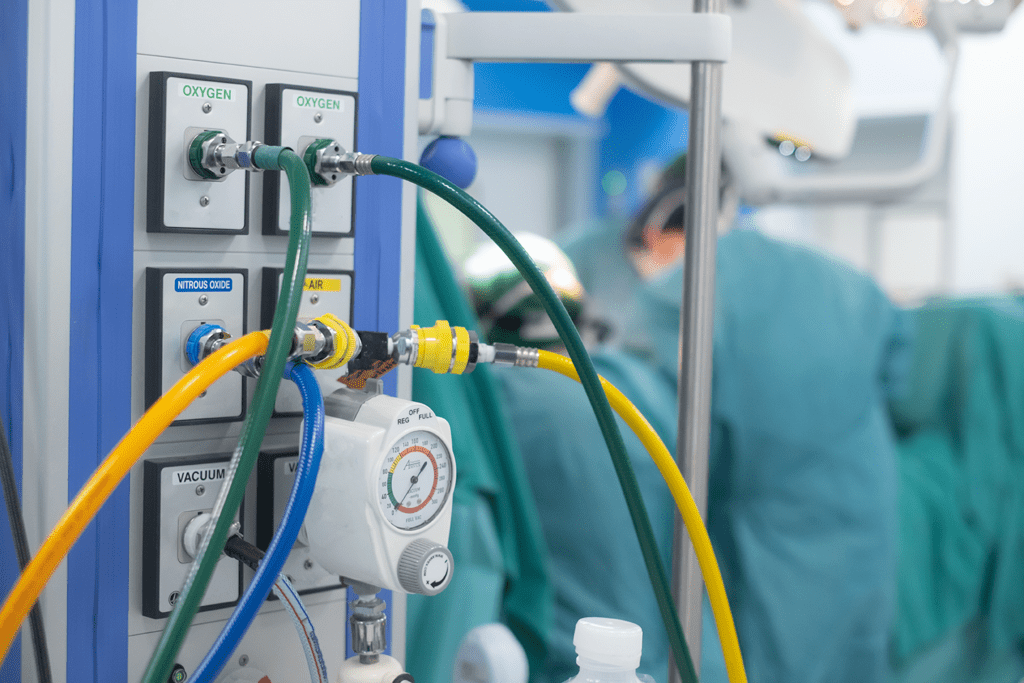
Medical gas and vacuum systems are not ordinary building utilities. They support anesthesia, life-sustaining therapies, and critical procedures in both human and veterinary medicine. As facilities become more sophisticated, the importance of disciplined safety practices only increases.
Safety may be a shared goal, but responsibility must always be clearly assigned. Identifying hazards, documenting them, and ensuring that design authority formally addresses them is not overreach. It is the foundation of professional accountability and safe facility design.
Frequently Asked Questions (FAQS)
NFPA 99 is written for healthcare facilities serving human patients, but it is widely used as a safety reference for medical gas systems in veterinary environments because the hazards it addresses are the same. In the absence of a veterinary-specific medical gas safety code, it represents the most recognized benchmark for system safety practices.
Identifying potential hazards is not the same as directing design changes. Contractors and specialty system providers are not making engineering decisions when they flag risks; they are ensuring that those risks are reviewed and formally addressed by the engineer of record.
Written acceptance or modification of design concerns creates accountability and protects all parties. It documents that risks were recognized and evaluated by someone with design authority, rather than ignored or overlooked.
Prevalence does not equal safety. Many unsafe practices persist until an incident forces change. What matters is whether known hazards were properly evaluated and whether decisions were made intentionally and with full awareness of the risks.
When hazards are not documented and assigned, risk typically defaults to the owner and operator, often without their knowledge. Clear communication ensures that owners understand the implications of design decisions before problems occur.