
Medical gas systems – the network of pipes, valves, alarms, and equipment delivering lifesaving gases like oxygen and medical air – are the lifelines of any hospital. A medical gas safety inspection is a comprehensive checkup of these systems to ensure they are safe, reliable, and compliant with regulations. Hospital compliance officers, biomedical engineers, facilities directors, and risk managers are all tasked with keeping these critical utilities in check. This article explains what to expect during a medical gas safety inspection, including the regulatory requirements, the components that get checked, best practices on inspection frequency, and how to prepare your facility. By understanding the process (and knowing the standards behind it), you can ensure your facility remains both safe and in compliance, and you’ll be well prepared to work with professionals like Compass Cryogenics to maintain your medical gas systems.
OSHA, Joint Commission, and NFPA 99 Requirements
Medical gas safety inspections are not just a best practice – they are mandated (directly or indirectly) by multiple regulatory bodies and standards. In the United States, the primary guidelines come from the Occupational Safety and Health Administration (OSHA), The Joint Commission (TJC), and the National Fire Protection Association’s NFPA 99 Health Care Facilities Code. Each plays a role in ensuring that hospitals maintain their piped medical gas and vacuum systems properly:
- OSHA: OSHA regulations focus on workplace safety, which includes the safe handling and storage of medical gases. For example, OSHA’s compressed gas standard requires that gas cylinders be visually inspected to ensure they are in safe (conditionosha.gov). Employers must handle, store, and use compressed gases per OSHA and Compressed Gas Association guidelines to prevent fires, explosions, or toxicity hazards in the hospital environment. In practice, this means an inspector (or your staff) will check that cylinders are secured (chained or strapped), properly labeled, and separated from incompatible materials as part of a safety inspection.
- The Joint Commission (TJC): Hospitals accredited by The Joint Commission must adhere to its Environment of Care (EC) standards, which incorporate medical gas system maintenance. TJC doesn’t prescribe an exact schedule for how often to test each component; instead, it requires each facility to develop a maintenance policy based on risk, manufacturers’ recommendations, and code guidance. Specifically, EC.02.05.09 mandates that hospitals inspect, test, and maintain critical components of their piped medical gas and vacuum systems in order to keep them safe and functional . During a Joint Commission survey, you will need to show documentation that your medical gas systems have been inspected and maintained according to your policy (and that your policy aligns with accepted standards like NFPA 99). Failure to do so could result in findings that affect accreditation.
- NFPA 99: NFPA 99 (2012 edition and later) is the definitive code for healthcare facilities’ gas and vacuum systems. It has been adopted in all 50 states in one form or another, meaning its requirements are effectively law through state or local codes. NFPA 99 outlines how medical gas systems should be designed, installed, and maintained. It requires regular inspection and testing of piped medical gas systems to ensure patient safety. For instance, NFPA 99 and related standards generally call for annual testing of alarms, valves, outlets, and source equipment (more on the specific components below). Important safety features like shutoff valves must be clearly labeled with the area they serve (per NFPA 99 §5.1.11.2), and an inspector will verify this. In short, NFPA 99 is the rulebook that your medical gas inspection will measure against. Notably, the Centers for Medicare & Medicaid Services (CMS) also require compliance with NFPA 99 for hospitals – tying code compliance to your ability to receive Medicare/Medicaid reimbursements.
In summary, these regulators work in tandem: OSHA focuses on immediate personnel safety (e.g. no unsafe cylinders), NFPA 99 provides the technical maintenance standards (adopted by fire/building codes), and The Joint Commission and CMS ensure hospitals actually follow those standards through their surveys and audits. A thorough medical gas safety inspection by a qualified professional will address all of these requirements, giving you the documentation and peace of mind that your facility meets compliance and safety benchmarks.
Components Checked During an Inspection (Outlets, Alarms, etc.)
What exactly gets inspected during a medical gas safety inspection? In short, every critical component of your medical gas pipeline system will be examined or tested to ensure it’s functioning properly and within code parameters. A certified medical gas inspector or technician will typically check the following components:
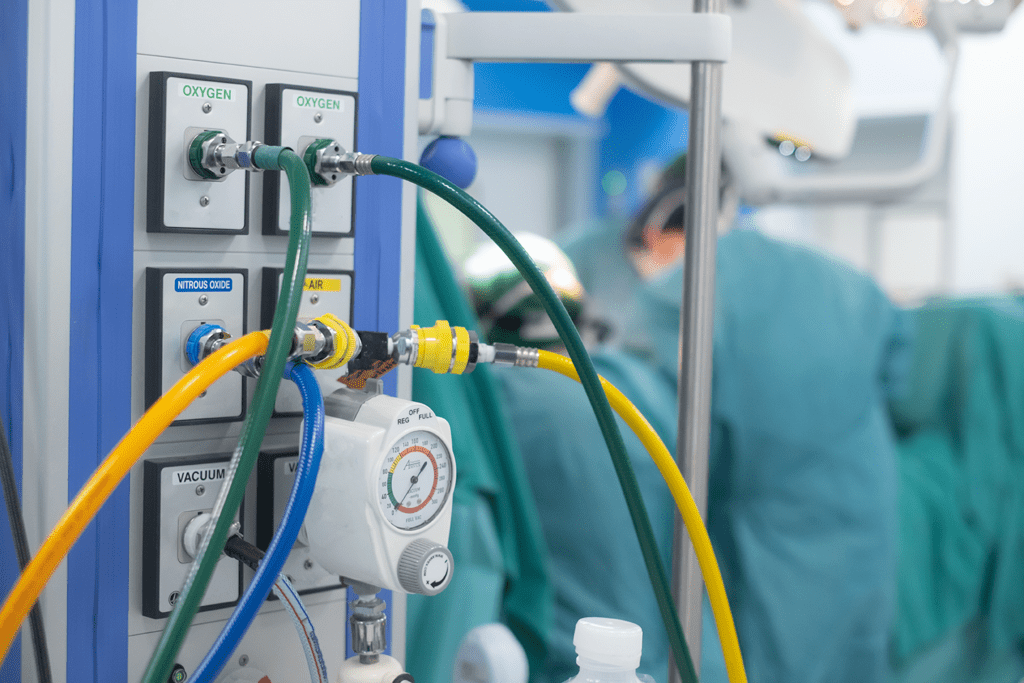
- Gas Outlets and Inlets: These are the wall or ceiling connectors where medical staff attach equipment (like oxygen masks, ventilators, or suction devices). Each outlet/inlet is tested to confirm that it locks and latches any device attached to it, has proper pressure, flow, and has no leaks. . The inspector may use specialized gauges to verify that oxygen outlets, for example, are providing the standard pressure (50 psi in many systems) and that there are no leaks or cross-connections. Outlets are also checked for proper labeling and color-coding (e.g. oxygen, vacuum, medical air) to prevent mix-ups.
- Zone Valves: Zone shut-off valve assemblies allow isolation of certain areas or rooms from the gas supply. Inspectors will locate each zone valve (often in hallways or above ceilings) and verify it is accessible, clearly labeled, and functional. Labels should identify the area served (e.g. “ICU Rooms 1-5 Oxygen”) in accordance with NFPA 99. The valve is typically operated (or simulated) to ensure you can shut off flow in an emergency. The inspection will note if any valves are blocked, unmarked, or in need of maintenance.
- Alarm Systems (Master, Area, Local Alarms): Medical gas systems include alarm panels that monitor pressures and alert staff to issues. Master alarms (usually located in the facilities office or security desk) monitor the whole facility’s medical gas statuses, while area alarms are installed in patient care zones (like an ICU or OR suite) to monitor that area’s pressure. Inspectors will test that alarm sensors and panels work correctly – for instance, by creating a low-pressure condition to see if the alarm sounds and the indicator light illuminates. All alarm signals (high/low pressure, tank changeover, etc.) should annunciate both audibly and visually. Annual testing of warning systems (alarms) is a standard requirement. The inspector will also review that alarm set-points are appropriately calibrated (e.g. the low-pressure alarm triggers when pressure drops 20% below normal).
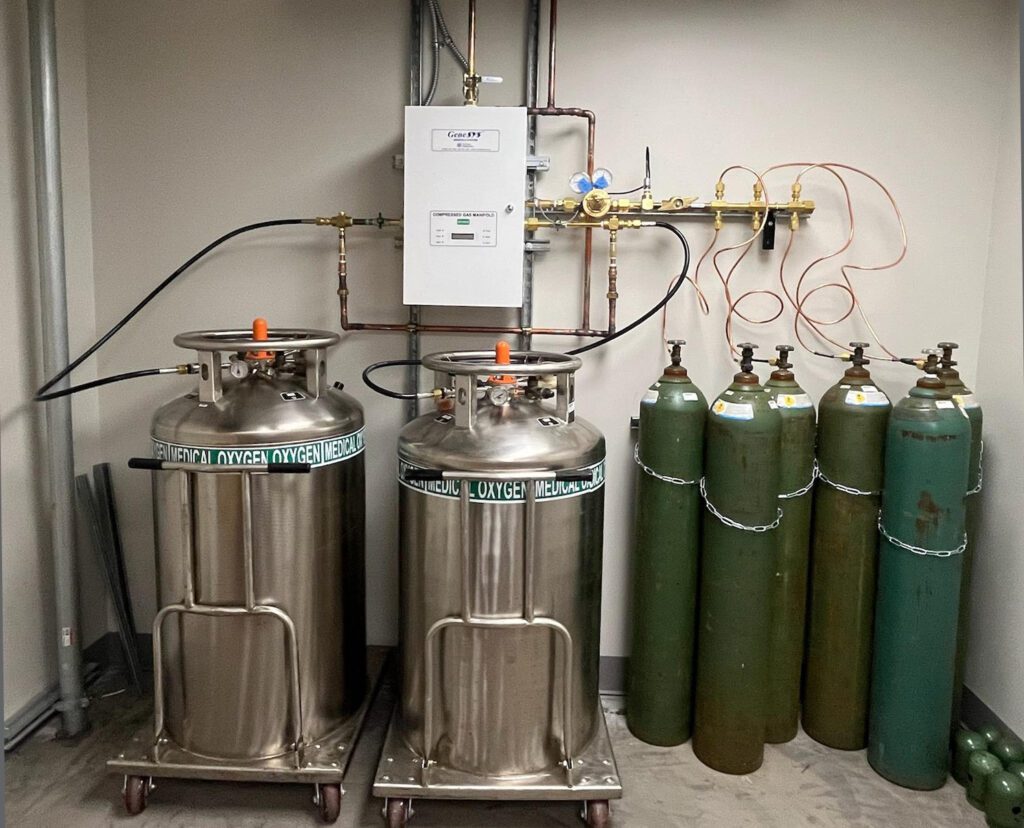
- Source Equipment: The “source” of your medical gases – whether it’s a bulk liquid oxygen tank, a manifold of compressed gas cylinders, medical air compressors, or vacuum pumps – receives careful scrutiny. An inspection will cover bulk oxygen storage tanks and vaporizers, checking for proper operation of pressure regulators, emergency valves, and that the tank has adequate reserves. (In fact, NFPA 55 requires bulk oxygen systems to be professionally inspected at least annually by the supplier or qualified personnel.) If you have manifold systems (for gases like nitrous oxide or CO₂), the inspector will test the automatic changeover function that switches from primary to secondary cylinders, ensuring continuity of gas supply. Medical air compressors and vacuum pump systems are checked for maintenance issues like filter conditions, oil levels, operational alarms, and dew point management. All source systems must have appropriate redundancy and meet required pressure/vacuum levels – the inspection report will verify this.
- Piping and Zone Integrity: The pipeline distribution network, including pipe fittings, flexible connectors, and articulating booms, is visually inspected for signs of wear, damage, or improper materials. Flexible hose connectors (for example, in ceiling pendants in operating rooms) are prone to wear and must be inspected for cracks or leaks. The inspector may perform a leak test on piping zones (often using a pressure drop test or ultrasonic leak detector) to ensure there are no hidden leaks in the system. Any abnormal pressure drop could indicate a leak that needs repair.
- Gas Quality and Purity: In addition to mechanical components, a thorough inspection often includes verifying the quality of the gases delivered. For medical air systems, this can involve testing the air purity – checking that filters are removing contaminants and that the delivered air meets pharmacopeia standards for medical air (for example, ensuring a low dew point and no excessive carbon monoxide or particles). Oxygen and other gases may be tested for purity if contamination is suspected. Verifying gas quality ensures that patients are receiving clean, safe breathing gases.
- Documentation and Log Review: Finally, expect the inspector to review your facility’s maintenance logs and documentation related to the medical gas system. After the physical checks, reputable inspectors provide a detailed report that includes an inventory of all components checked, the results of each test, and any deficiencies noted, with references to code requirements. This report is crucial for your records. Hospitals are expected to keep such records on file and available for authorities having jurisdiction (AHJs) or accrediting agencies upon request. Part of the inspection process is ensuring you have proper documentation of past tests, valve labeling, and staff training in place.
In short, a medical gas safety inspection is comprehensive. From the bedside outlet where oxygen connects to a patient, all the way back to the bulk storage tank and alarm panels, every link in the supply chain is checked. The goal is to catch any issue – whether a minor leak, an alarm that didn’t sound, or a valve that’s not labeled – before it can compromise patient safety or put you out of compliance.
Annual vs. Semi-Annual Inspection Best Practices
One common question is how frequently a medical gas safety inspection should be performed. The answer can depend on regulatory minimums versus best practices. At a minimum, a comprehensive inspection should be conducted at least annually. Industry standards (as reflected in NFPA 99 and related guidelines) generally include annual testing of all critical components: alarm systems, source systems, outlets/inlets, valves, and so on. Many hospitals indeed schedule a full inspection every 12 months – in line with NFPA’s recommendations and as a baseline for compliance. In practice, most hospitals hire third-party medical gas inspectors annually to verify every element of the system, ensuring they catch issues before surveyors (or, more importantly, before those issues impact patients).
However, while annual inspections are the minimum, they might not always be sufficient for optimal safety. Leading practices often call for more frequent checks (on some components) or interim inspections semi-annually. For example, consider alarm panels or emergency backup systems – waiting a full year to discover a malfunction could be risky. That’s why some facilities opt for a semi-annual schedule for certain tests, meaning they conduct a scaled-down inspection or specific critical tests every six months in addition to the yearly comprehensive check. This might include, for instance, testing all alarm indicators mid-year, or doing a mid-year round of outlet leak testing in high-use areas. By doing so, you can catch and fix problems at the six-month mark rather than waiting all year.
Regulatory agencies recognize that different facilities may need different maintenance frequencies. The Joint Commission and CMS require hospitals to perform a risk assessment (and follow manufacturers’ guidelines) to determine the appropriate inspection and maintenance intervals. If your facility has older equipment, extremely high patient acuity (Category 1 systems that are life support-critical), or a history of issues, a more frequent (semi-annual or even quarterly) inspection schedule could be justified to mitigate risk. On the other hand, a brand new facility might adhere to annual inspections supplemented by diligent monthly in-house checks of gauges and alarms.
It’s also worth noting that beyond the annual required tests, there are recommendations for monthly and quarterly checks on certain aspects of the medical gas system. For example, some guidance suggests a quick daily or weekly visual check of your oxygen tank levels and medical air compressor readings (usually done by your facilities staff), monthly testing of compressor dryers or alarm backup batteries, and so on. These interim checks do not replace the formal annual inspection by a qualified technician, but they enhance safety.
Best practice: Develop a tiered maintenance plan. Use the annual professional inspection as a cornerstone, and consider semi-annual professional check-ups for critical systems or if your risk assessment indicates it. In between, have your trained maintenance staff perform regular rounds (daily/weekly/monthly) to monitor pressures, check for unusual conditions, and keep logs. This proactive approach exceeds the bare minimum and greatly reduces the chance of a surprise failure. Compass Cryogenics can help you design an appropriate maintenance and inspection schedule – whether annual, semi-annual, or more frequent – tailored to your facility’s needs.
Preparing Your Facility for an Inspection
A medical gas safety inspection will go smoother – and you’ll be more likely to pass with flying colors – if your facility is well prepared. Here are some best practices to prepare for an upcoming inspection:
- Organize Your Documentation: Gather all maintenance records, past inspection reports, and relevant certificates (like any third-party verification reports from installation or modifications). Up-to-date documentation is key to demonstrating compliance. Ensure that you have records of alarm tests, valve servicing, staff training, and any repairs done. Having these neatly filed and readily available will save time during the inspection and show inspectors (or surveyors) that you stay on top of your medical gas program.
- Ensure Accessibility of Equipment: Go through your facility and verify that all critical components are accessible. For example, make sure zone valve boxes aren’t blocked by furniture or wall obstructions, and that ceiling panels hiding valves can be opened. Alarms and control panels should be easily reachable. If an inspector has trouble accessing a valve or alarm, it might be noted as a deficiency, even if the equipment itself works. Unlock rooms or cabinets housing medical gas equipment (e.g. the vacuum pump room or manifold closet) ahead of time and have keys available.
- Verify Labeling and Signage: Proper labeling is a frequent citation point, so double-check that all medical gas shutoff valves and zones are labeled correctly. Each zone valve should clearly indicate the area or rooms it controls (as required by NFPA 99. Additionally, signage such as “Medical Gas Shutoff – Oxygen for Wing A” should be visible where needed, and cylinders should be labeled with their contents and status (full, empty). Correct any missing labels before the inspection. This not only helps the inspector but is crucial for emergency responders as well.
- Conduct a Preliminary Self-Check: It’s wise to do an internal walkthrough prior to the official inspection. Have your facilities or biomedical team do a mini-inspection: check that all alarm panels are showing “normal” status (no trouble indications), listen for any hissing sounds near outlets (a sign of leaks), ensure valves are not leaking, and verify cylinder storage is orderly (cylinders secured and separated by type). If you discover any minor issues – like an outlet that’s slightly loose or an alarm mute button that’s sticky – you can fix them proactively. This way, those issues won’t turn up as surprises during the formal inspection.
- Notify and Prepare Staff: Inform clinical and facilities staff about the upcoming inspection date. It’s important because testing alarms can cause audible alerts in patient areas; staff should know in advance so they aren’t alarmed, or so they can inform patients if needed. Coordinate with department heads to find an inspection time that minimizes impact on patient care (for example, avoid peak surgery times if you’ll be in the OR, or do area alarm tests when ICU staff can step away briefly). Assign a knowledgeable staff member to accompany the inspector on their rounds – this helps with access and also is an opportunity to ask questions and learn from the process.
By taking these steps, you’ll create a smoother inspection experience and demonstrate a culture of preparedness. Remember, the goal of an inspection is not to “catch you out,” but to ensure safety. If you’ve done your homework, an inspection can even be a positive learning opportunity for your team. Compass Cryogenics can assist you at every step – from helping you review your compliance documentation to performing a thorough medical gas safety inspection and addressing any issues. If you’re unsure about your facility’s readiness or it’s been a while since your last inspection, it’s wise to schedule a professional assessment. Being proactive will always pay off in preventing problems and ensuring continuous, safe operations.
Frequently Asked Questions (FAQs)
At minimum, annually. Most hospitals schedule a comprehensive medical gas safety inspection once every year. Annual inspections are recommended by NFPA 99 (and all 50 states enforce this code) as the baseline for safety. However, depending on your facility’s needs, you might consider semi-annual inspections or additional interim checks. The Joint Commission and CMS allow (and encourage) a risk-based approach – meaning if your system is critical or older, doing inspections twice a year can be a smart move. The key is to not go beyond 12 months without a thorough check of your medical gas system.
Medical gas inspections should be performed by trained and certified professionals. Ideally, the inspector will hold certification such as ASSE 6020/6040 (Medical Gas Inspector) or ASSE 6030 (Medical Gas Verifier), which are industry-recognized qualifications. These certifications ensure the person has detailed knowledge of NFPA 99 and the technical expertise to test gas systems properly. Some facilities have in-house staff (e.g. biomedical or facilities engineers) with ASSE 6040 certification for medical gas maintenance – such staff can handle routine maintenance and certain inspections. However, many hospitals use third-party specialists for the annual inspection to get an unbiased, thorough review. Compass Cryogenics, for example, has fully certified medical gas professionals who regularly perform compliance inspections. Always verify that whoever conducts your inspection is familiar with the latest code requirements and can provide the proper documentation of testing.
Skipping required inspections or failing to fix problems found in an inspection can have serious repercussions. From a patient safety standpoint, the consequence could be a critical system failure – for instance, an undetected leak or malfunction could deprive a patient of oxygen at a crucial time. From a regulatory perspective, consequences include citations, fines, or loss of accreditation. The Joint Commission, during surveys, will review your medical gas maintenance records; if you have no record of an annual inspection or if serious deficiencies are noted and unaddressed, they can issue Requirements for Improvement (RFIs) that jeopardize your accreditation. CMS can similarly cite hospitals under Condition of Participation compliance, potentially affecting Medicare funding. OSHA may levy fines if gas-related hazards (like improper cylinder storage or ventilation) are found. In short, non-compliance risks both safety incidents and legal/financial penalties – not to mention the liability if an avoidable accident occurs. This is why staying on top of inspections is not just about passing surveys, but protecting your patients and your organization.
A well-planned inspection should cause minimal disruption. Professional inspectors understand that patient care comes first, and they work with your team to schedule tests at convenient times. Most checks (like alarm testing or pressure readings) are brief and can be done without taking systems offline. For example, alarm function can often be tested by adjusting settings or using test modes, so that you’re not actually depriving any area of oxygen when triggering a low-pressure alarm. Similarly, checking an outlet’s flow might momentarily occupy that outlet, but inspectors can coordinate with staff to avoid times when it’s needed for a patient. There may be rare cases where a particular test requires partial shutdown (for instance, switching over a manifold or calibrating a valve) – in those cases the inspector will coordinate closely with your facilities team to ensure backup systems are in place. In general, hospitals do not need to evacuate patients or cease operations during a medical gas safety inspection. The process is designed to be done “live,” under normal operation, and a skilled inspector will be virtually invisible to patients. Your role is mainly to ensure the inspector has access everywhere they need to go; they’ll handle the rest with minimal fuss.
If an inspection uncovers an issue – say a leak, an alarm that didn’t sound, or a valve that’s not meeting requirements – the inspector will document it in the report along with recommended corrective actions. Don’t panic. Most deficiencies can be addressed with targeted maintenance or repairs. For critical problems (for example, an alarm that is completely non-functional or a major leak in a pipe), the inspector will likely alert you immediately so you can take prompt action (such as closing a valve to isolate a leak or implementing backup measures). Less critical issues will be noted as “deficiencies” that need correction within a reasonable timeframe. The inspection report will usually highlight which findings are urgent safety issues versus which are minor or “grandfathered” conditions. “Grandfathered” means the issue pertains to an older installation that was compliant under an earlier code – it might not need immediate correction unless you renovate that area. After the inspection, you should create a plan to fix any deficiencies. This might involve scheduling repairs (Compass Cryogenics can perform many fixes or coordinate them) and then documenting when those fixes are completed. Once corrected, you have the option to have the component re-tested to ensure the problem is fully resolved. The bottom line: finding problems is exactly why we do inspections – so they can be fixed before they lead to failure or penalties. A good inspection report is like a roadmap to improving and maintaining a safe medical gas system.
Any other questions? Contact us today.
Contact Compass Cryogenics to schedule a medical gas safety inspection or consultation. Our certified technicians will help keep your facility safe, compliant, and survey-ready.