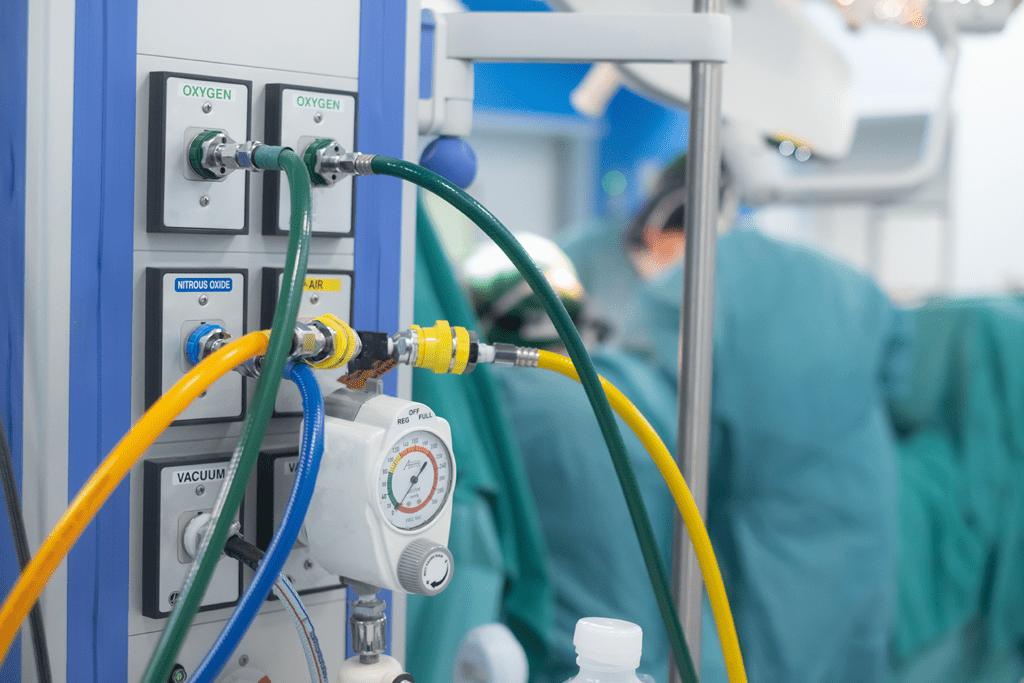

A medical gas system exists to deliver clean, pure gas to a patient. The uncomfortable irony is that the act of building or repairing one can introduce contamination into the very pipes meant to carry that gas. Scale from brazing, moisture, and debris from construction can all end up inside a finished pipeline that looks perfect and holds pressure without a leak.
Particulate and purity testing is how a verifier documents that the gas at the tested outlets is actually clean, and that it is the gas it is supposed to be. For the verifiers and engineers who worry about what construction or a repair might have left behind, this article explains why purity matters for patient safety, the NFPA 99 particulate and purge tests, the USP gas-concentration standards, why this testing has to repeat after repairs and cut-ins, and how periodic purity testing fits into the care of an existing system.
Why Purity Matters for Patient Safety
To understand the risk, it helps to understand how medical gas pipe is joined. The piping is copper, and the joints are brazed at high temperature. NFPA 99, the National Fire Protection Association’s Health Care Facilities Code, requires the interior of the pipe to be continuously purged with oil-free dry nitrogen during brazing, specifically to prevent the formation of copper oxide scale on the inside of the joint. The purge has to continue until the joint is cool to the touch.
When that purge is skipped, which happens when brazing is left to someone unaware of the code, the oxygen in the trapped air reacts with the hot copper and forms scale inside the pipe. That scale, along with moisture and ordinary construction debris, does not stay put. It can break loose, travel downstream with the gas flow, and arrive at an outlet, where two bad things can happen: a patient can inhale particulate, and the debris can clog or impair the sensitive equipment that depends on clean gas, including flowmeters, regulators, ventilators, and the blenders inside them. Moisture compounds the problem by promoting corrosion and contamination over time.
In other words, a system can be finished, pressurized, and leak-tight while quietly carrying contamination toward patients. Particulate and purity testing is the part of verification that documents the gas is not just present and correct, but clean, at the time of testing.
NFPA 99 Particulate & Purge Tests
NFPA 99 uses two complementary tests to confirm the inside of the piping is clean. The first removes contamination, and the second measures what remains.
- Piping purge test: Each system is purged to clear out residual particulate. Working through the outlets, each one is purged with an intermittent high-volume flow of test gas until the purge produces no discoloration in a clean white cloth held over the outlet. The cloth acts as a simple filter, and a clean cloth is the visual pass.
- Particulate test: A measured test then confirms the result. A specified volume of oil-free dry nitrogen (Nitrogen NF) is passed through a fine filter at a controlled flow rate, at outlets selected under NFPA 99, including outlets most remote from the source, and the particulate collected on the filter must stay within the limit NFPA 99 sets.
There is logic to testing the most remote outlets: the furthest point from the source is where loosened debris is most likely to have collected, so it is the most revealing place to check. As with the rest of verification, the installer performs initial blowdown and purge testing during installation, and an independent ASSE 6030 verifier performs the purge, particulate, and purity tests during the formal verification, a structure we explain in our guide to medical gas system certification.
USP Gas Concentration Standards
Clean piping is only half of purity. The other half is confirming that the gas itself is the correct gas at the correct quality. Medical gases must meet United States Pharmacopeia (USP) standards, with each gas governed by a monograph that defines its required concentration and acceptable contaminants.
During verification, the gas at the outlets is analyzed to confirm two things:
- Correct concentration to USP limits. The gas delivered must match its USP monograph, so that oxygen is oxygen at the required concentration and medical air is the correct mixture, not something diluted or off-spec.
- Absence of contaminants. Positive-pressure systems are checked for contaminants such as moisture and hydrocarbons, held to the limits that apply.
This matters most for medical air, which is generated on site by compressors rather than delivered in cylinders. Compressor systems can introduce oil, moisture, and other contaminants, so the air quality has to be confirmed before the system serves patients. The result is documented evidence that, at the time of testing, the gas at the tested outlets was within the applicable limits, not just that gas flows.
Testing After Repairs and Cut-Ins
Particulate and purity testing is not a one-time milestone you clear at construction and forget. Every time the piping is opened, repaired, or extended, contamination can be reintroduced, which means the affected portion has to be re-tested before it goes back into service.
Periodic purity testing is a separate, ongoing activity. Many facilities schedule purity and contaminant testing of in-service systems, medical air in particular, as part of their maintenance program, at intervals set by facility policy, manufacturer guidance, and applicable requirements. It is not a substitute for verification, and it does not include cross-connection testing, which belongs to the verification of new or modified piping.
NFPA 99 singles out one situation in particular: the final tie-in. When a final brazed connection is made without a nitrogen purge, which is sometimes unavoidable when tying into an active system, additional testing downstream of that joint is called for, because an un-purged joint is exactly where fresh scale can form. After a repair, addition, or renovation that opens or modifies the piping, the affected section should receive the testing that scope of work requires. For brazed piping work, that typically means re-purging, particulate testing, and purity confirmation, documented as part of the required verification, before the section carries gas to patients again.
This is where post-repair testing is easy to overlook and important to get right. The principle is the same one that governs the rest of verification: any work that opens the pipe is a fresh opportunity for contamination, so that work needs testing matched to its scope before the line returns to service. Our guide to common medical gas system problems covers the kinds of repairs that trigger it.
How Compass Cryogenics Helps
Compass Cryogenics is detail-driven on purity. When independent verification is required, Compass can provide or coordinate qualified ASSE 6030 verification, subject to project scope and independence requirements, including the NFPA 99 purge, particulate, and purity tests: purging until a clean white cloth shows no discoloration, running the particulate test at the most remote outlets, and analyzing gas concentration against the applicable limits. We document each result, and when repairs, additions, or cut-ins open the piping, we perform or coordinate the testing that work requires, including the final tie-in test where a joint had to be brazed without a purge. Verification always stays independent of the installer, so where Compass performed the installation or repair, a separate qualified verifier completes it. For in-service systems, we also provide periodic purity and contaminant testing as part of an ongoing maintenance program.
You can see our full medical gas verification service, and because contamination so often follows construction work, our repairs and installation and upgrades teams can support the project from cut-in to handover, with verification kept independent of the installing contractor. We serve healthcare facilities across New England, the Mid-Atlantic, and select Midwest markets, scheduling around your operations to keep disruption to a minimum.
Frequently Asked Questions
What is medical gas particulate and purity testing?
It is the part of verification that checks the inside of the piping is clean and that the gas at the tested outlets meets the applicable purity and concentration limits. Facilities also schedule periodic purity and contaminant testing of in-service systems as part of routine maintenance. It catches contamination like brazing scale, moisture, and debris that construction or repairs can leave behind. Our medical gas verification guide shows where it fits in the full sequence.
How is the particulate test performed?
A specified volume of oil-free dry nitrogen is passed through a fine filter at a controlled flow rate, at outlets selected under NFPA 99 including those most remote from the source, and the particulate collected must stay within the limit NFPA 99 sets. The full test sequence is covered in our guide to ASSE 6030 verification.
What is the purge test?
Each outlet is purged with an intermittent high-volume flow of test gas until the purge produces no discoloration in a clean white cloth held over the outlet. The cloth acts as a filter, so a clean cloth indicates the purged outlet is free of loose particulate. It is one of several checks an independent verifier performs.
Why does brazing cause contamination?
When copper pipe is brazed without continuously purging the interior with oil-free dry nitrogen, the trapped oxygen reacts with the hot copper and forms scale inside the pipe. That scale can break loose, travel downstream, and reach outlets, where it can harm patients and impair equipment like flowmeters and ventilators. NFPA 99 requires the nitrogen purge precisely to prevent this, which is why post-work repairs are tested carefully.
Do I need to re-test purity after a repair?
If the work opened or modified the piping, yes. A cut-in, brazed repair, or addition can reintroduce contamination, so the affected portion should receive the testing that scope of work requires, typically purge, particulate, and purity testing, before returning to service. A final tie-in brazed without a nitrogen purge calls for additional downstream testing, which is part of why renovations and additions need verification.
Concerned about contamination after construction or a repair? Compass Cryogenics can provide or coordinate independent particulate, purge, and purity testing as part of ASSE 6030 verification, and offers periodic purity and contaminant testing for in-service systems, with clearly documented results. Schedule a verification or request a quote, call us at (888) 833-2796, or drop us a line through the contact form on this page.