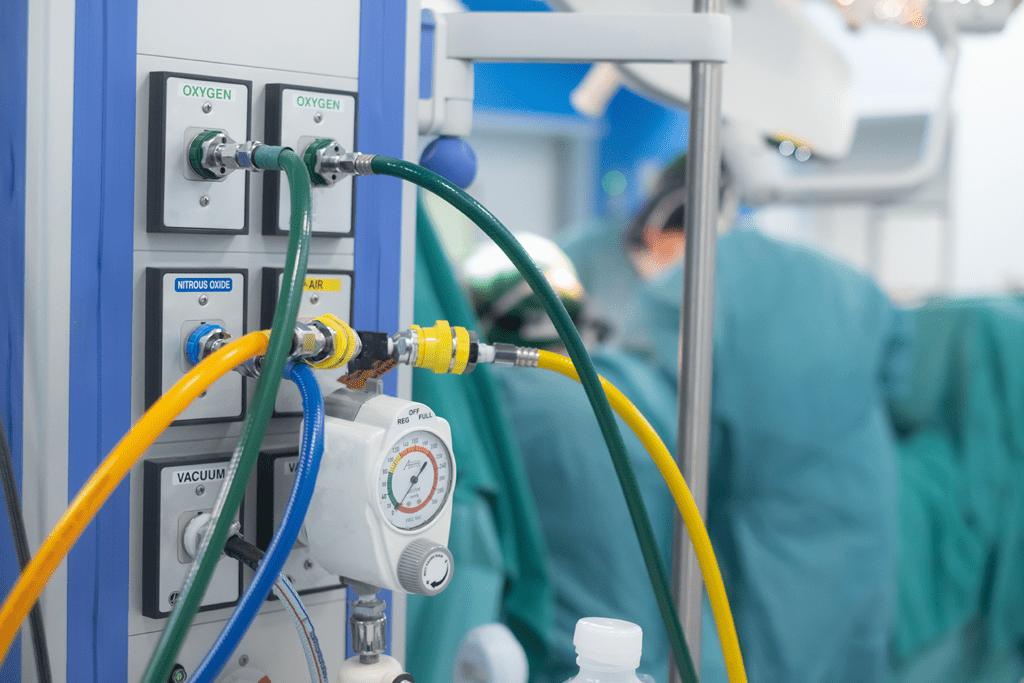

Of everything that can go wrong in a piped medical gas system, a cross-connection is among the most dangerous, precisely because it is invisible until the moment it hurts someone. A cross-connection means an outlet labeled for one gas actually delivers another. A patient who should be receiving oxygen could instead receive medical air, nitrogen, or nitrous oxide, and nothing about the outlet looks wrong.
Cross-connection testing is the check that catches this before a patient is ever connected. For the biomedical engineers, contractors, and verifiers responsible for bringing new or modified piping into service, it is one of the most important tests there is. This article explains what a cross-connection is and why it is deadly, the NFPA 99 test procedure in detail, when the test is required and re-required, and how it confirms the correct gas at each outlet in the work being verified. One clarification up front: cross-connection testing belongs to the verification of new, modified, or repaired piping. It is not part of a routine annual or periodic inspection of a system that has not been changed.
What a Cross-Connection Is and Why It’s Deadly
A cross-connection occurs when the piping of two different medical gas or vacuum systems is connected, or crossed, so that the wrong gas can reach an outlet. It can happen when lines are tied together incorrectly during installation, when a repair reconnects a line to the wrong system, or when an addition joins new piping to the wrong gas.
What makes it so dangerous is its invisibility. The outlet still looks correct, and it is still labeled correctly, so a clinician has no reason to suspect anything. They connect a patient who needs oxygen, and the outlet delivers something else. Receiving nitrogen, medical air, or nitrous oxide in place of oxygen can cause hypoxia and death within minutes, and a vacuum line crossed with a gas line is equally hazardous. There is no warning sign a person can see or hear. Only testing reveals it.
That is why NFPA 99, the National Fire Protection Association’s Health Care Facilities Code, treats the cross-connection test as a mandatory, non-negotiable check, and why it sits at the center of any verification and is a core reason to hire an independent verifier in the first place. It is, plainly, a life-safety test.
NFPA 99 Cross-Connection Test Procedure
The strength of the cross-connection test is its simplicity. By isolating each system in turn, it leaves no room for ambiguity about what reaches a given outlet. The procedure runs as follows:
- Reduce every system to atmospheric pressure. All medical gas and vacuum systems are brought to atmospheric pressure, with all outlets and inlets installed and connected.
- Charge one system only. A single system is pressurized with oil-free dry nitrogen, known as Nitrogen NF, to the test pressure NFPA 99 specifies, while every other system remains at atmospheric pressure.
- Test every outlet and inlet in turn. Each outlet and inlet across all systems is checked to confirm that the test gas discharges only from the system actually being pressurized, and that no outlet belonging to any other system shows pressure or flow.
- Repeat for each system. The process is repeated, one system at a time, until every gas and vacuum system has been individually pressurized and confirmed.
If the test gas ever appears at an outlet that belongs to a different system, a cross-connection exists. It has to be located, corrected, and then re-tested, because a corrected line is not proven until it passes.
Two details are worth understanding. Oil-free dry nitrogen is used as the test gas because it is inert and clean, so it confirms the connections without introducing oil, moisture, or other contaminants into the piping. The cross-connection test is performed first by the installer as an initial check, and then again by an independent ASSE 6030 verifier as part of the formal verification. For the full sequence and how the two phases fit together, see our guides to ASSE 6030 verification and medical gas system certification.
When Testing Is Required
A cross-connection test is not a one-time event you can check off and forget. The possibility of a cross-connection returns every time the piping is opened, so the test is repeated as part of verifying any breach, repair, or addition to the piping. It is required for:
- New systems, as part of the initial verification before the system is placed into service.
- Additions and extensions, such as new outlets or a line run to a new room.
- Renovations that alter existing piping, which we cover in planning a medical gas system upgrade.
- Repairs that open or breach a line, including the kinds of fixes in our guide to common medical gas system problems.
- Any breach of the piping, even a single joint opened for a tie-in.
The principle is simple and worth repeating to anyone who manages this work: every time you open the pipe, you re-test for cross-connections before that section carries gas to patients again. The affected portion must be verified, and the result documented, before it returns to service. The flip side matters too: if no piping has been opened, altered, or added since the last verification, a routine annual or periodic inspection does not repeat the cross-connection test. Periodic testing of an in-service system focuses on condition and performance, and gas purity and contaminant testing can be scheduled when you want ongoing assurance about gas quality.
Confirming Correct Gas at Every Outlet
The point of the test is a single, documented outcome: each outlet and inlet in the work being verified delivers exactly the gas it is labeled for at the time of testing. That is why the test checks each outlet and inlet in the tested area rather than a sample. With a hazard this serious, one missed outlet is one too many.
Confirming the correct gas works hand in hand with confirming the correct label. An outlet must deliver the right gas and clearly identify what it delivers, which is why labeling verification accompanies the cross-connection test during verification, a theme we pick up in our guide to zone valve and labeling rules. The verifier documents both, and that documentation becomes part of the verification report you need before a system can be placed into patient service.
This is where meticulousness is not a nicety but the whole job. A cross-connection test done carefully, outlet by outlet, is what stands between a correctly built system and a preventable tragedy.
How Compass Cryogenics Helps
Compass Cryogenics treats the cross-connection test as the life-safety check it is. As part of ASSE 6030 verification, which Compass can provide or coordinate subject to project scope and independence requirements, each system is pressurized individually with oil-free dry nitrogen and checked outlet by outlet to confirm that only the correct gas discharges, and the result is documented in your verification report. The test is performed when new piping is installed and repeated after a breach, repair, or addition, as part of verifying that work. It is not a recurring service for unchanged systems, and Compass does not verify work it installed or repaired; in those cases, we coordinate a separate qualified verifier. For in-service systems, we offer periodic gas purity and contaminant testing instead.
You can see our full medical gas verification service, and when work on the system creates the need for re-testing, our repairs and installation and upgrades teams can handle the work itself, with the follow-up verification performed by a separate, independent verifier. We serve healthcare facilities across New England, the Mid-Atlantic, and select Midwest markets, scheduling around your operations to keep disruption to a minimum.
Frequently Asked Questions
What is a cross-connection in a medical gas system?
It is when the piping of two different gas or vacuum systems is crossed, so an outlet delivers a gas other than the one it is labeled for, such as air or nitrogen instead of oxygen. Because the outlet still looks and reads correct, the error is invisible without testing, which is what makes it so dangerous. Our medical gas verification guide explains where this check fits.
How is cross-connection testing performed?
With all systems reduced to atmospheric pressure, one system at a time is charged with oil-free dry nitrogen (Nitrogen NF) to the specified test pressure, and each outlet and inlet in the tested portion is checked to confirm the test gas discharges only from the system being pressurized. The process repeats for each system. The full sequence is detailed in our guide to ASSE 6030 verification.
When is cross-connection testing required?
It is required for new systems, additions, renovations, and repaired systems, and it must be repeated after any breach of the piping, even a single joint opened for a tie-in. Any work that opens a line, including a repair or an addition, reintroduces the possibility of a cross-connection and requires re-testing. It is not part of a routine annual inspection of a system that has not been changed.
Why is a cross-connection so dangerous?
Because a patient can receive the wrong gas without anyone realizing it. An outlet expected to deliver oxygen might instead deliver nitrogen, air, or nitrous oxide, which can be fatal within minutes, and the error gives no visible warning. The cross-connection test is the check that catches it, which is a central reason to use an independent verifier.
Who performs cross-connection testing?
The installer performs an initial cross-connection test during installation, and an independent ASSE 6030 verifier performs it again as part of the formal verification. NFPA 99 requires the verifier to be separate from the installer, a point we explain in Certified vs. Verified. You can arrange independent testing through our verification service.
Need a cross-connection test on a new, modified, or repaired system? Compass Cryogenics can provide or coordinate cross-connection testing as part of independent ASSE 6030 verification, subject to project scope and independence requirements, confirming the correct gas at each outlet in the verified work and documenting the result for your records. To scope a quote, send us your facility address, the systems and gases involved, and the approximate number of outlets and inlets affected. Schedule a verification or request a quote, call us at (888) 833-2796, or drop us a line through the contact form on this page.