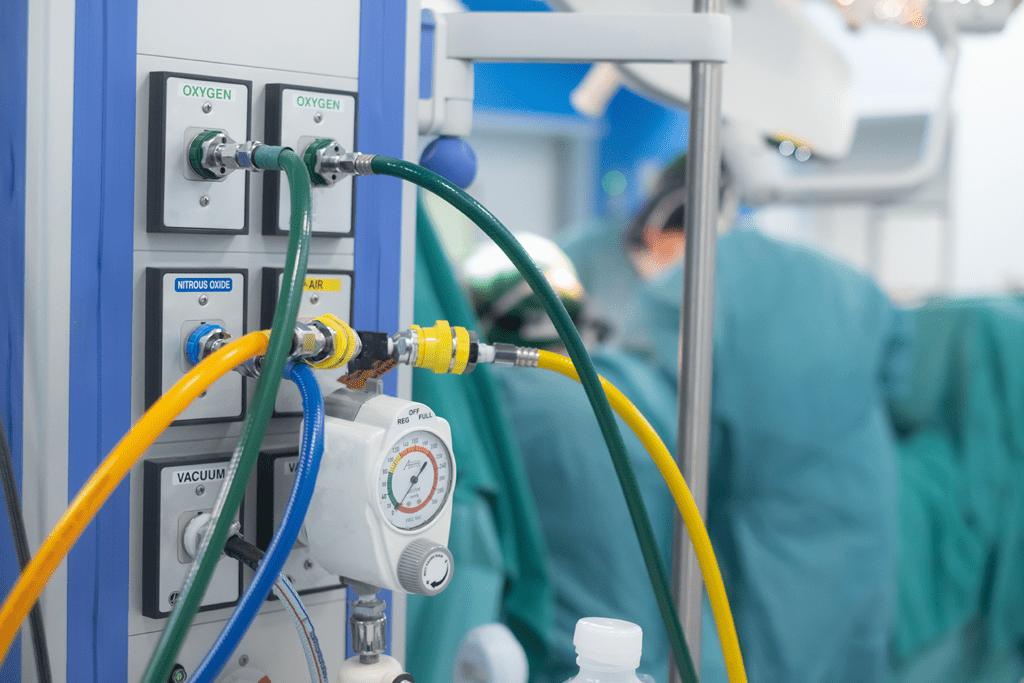

Before a new or modified medical gas system can be placed into patient service, NFPA 99, the National Fire Protection Association’s Health Care Facilities Code, requires it to be tested, verified, and documented. Facilities and contractors usually call the resulting paperwork “medical gas system certification,” and on the central point they are correct: you cannot turn the system on for patients without that documentation on file.
The word “certification,” though, hides a distinction worth getting right, because it changes what you are actually buying and who can provide it. If you manage an ambulatory surgery center (ASC), a dental office, or a medical office building (MOB) commissioning a new or modified piped system, this article clears it up. We explain how certification, verification, and inspection differ, walk through the certification process step by step, cover the documentation you need on file, and explain the gate that stands between a finished system and patient use.
Certification vs. Verification vs. Inspection
Three terms get used interchangeably in the field, and the imprecision causes real confusion when it is time to commission a system.
- Certification (the common term): In everyday use, “medical gas system certification” refers to the documentation showing that a new or modified system has been tested and verified before it is placed into service. It is what your Authority Having Jurisdiction (AHJ) and accreditor want on file. The term is fine as shorthand, as long as you know what sits underneath it.
- Verification (the precise term): Strictly speaking, people get certified and systems get verified. As we explain in Certified vs. Verified, a system is verified, meaning it is objectively tested at a point in time by an independent ASSE 6030 verifier, while the people performing the work hold certifications. The “certification documentation” you need is, properly, the verification report. Our medical gas verification guide covers it in full.
- Inspection (a different activity): An inspection is a recurring evaluation of the condition and performance of an existing, in-service system within an agreed scope. It is not the same as verifying a newly built or modified system before first use.
Why does the distinction matter beyond semantics? Because precise language tells you what you are actually getting: objective testing and the documentation that proves it, confirmed at the time of testing, not a guarantee of future performance. It also tells you who is allowed to do it, which the next sections make clear.
The Certification Process Step-by-Step
What people call “certifying” a system is really a two-phase testing process under NFPA 99, and the two phases are performed by two different parties.
Phase 1: Installer-performed tests. During and after installation, before any independent verification, the installing contractor performs a defined set of initial tests in accordance with NFPA 99. These typically include:
- Blow-down: Clearing the distribution piping with oil-free, dry nitrogen before station outlets are installed, to remove debris.
- Initial pressure test: Pressurizing the piping to confirm there are no leaks at the new joints.
- Initial cross-connection test: An early check that the systems are not crossed.
- Initial piping purge test: Purging each system to clear particulate matter.
- Standing pressure test: Holding the system at pressure, for a specified period, to confirm it stays leak-tight.
Phase 2: Independent ASSE 6030 verifier tests. Only after the installer’s tests are complete does an independent verifier, who cannot be the installing contractor, perform the final verification. This is the testing that produces the documentation you need, and it includes:
- Standing pressure test at operating pressure.
- Cross-connection test, charging one system at a time while all others sit at atmospheric pressure, to confirm that each outlet delivers only the gas it is labeled for.
- Particulate test, discharging a measured flow through a fine filter to confirm the piping interior is clean.
- Piping purge test to clear any remaining particulate.
- Gas purity test, analyzing the gas at the outlets to confirm it meets the purity and contaminant requirements that apply to that gas.
- Operational, alarm, valve, and labeling checks, confirming pressure and flow at the outlets, that alarms signal correctly, that valves operate, and that all labeling is present and correct.
This sequence is detailed further in our guides to ASSE 6030 verification and hiring a medical gas verifier. The requirement that the verifier be separate from the installer is not a formality, a point we take up in Who Owns Safety?.
Required Documentation
The documentation people call “certification” is what proves the two phases above were completed and passed. Before a system goes into service, you should have on file:
- The independent verifier’s report, with results for every test performed.
- Installer test records, documenting the Phase 1 tests.
- Gas purity analysis results, documenting the quality of the gas delivered at the time of testing.
- Cross-connection confirmation, showing each outlet delivers the correct gas.
- Labeling confirmation, showing pipes, valves, and outlets are correctly identified.
- As-built drawings, where the project produced them.
This is the package your AHJ and accreditor typically expect, and it is the kind of record a future survey may ask to see, so keep it organized and retrievable. Our guide to Joint Commission medical gas compliance explains how this documentation fits into ongoing compliance, because the principle does not change over the life of the system: if it isn’t documented, it didn’t happen.
Placing a System Into Patient Service
Here is the gate, stated plainly: a new or modified medical gas system cannot be placed into patient service until verification is complete and the documentation is on file. Gas should not flow to patients until an independent verifier has tested the work, including gas purity and cross-connection testing, and documented that it satisfies the applicable verification requirements at the time of testing.
This is the final step in commissioning a system, and it is where projects most often get held up at the finish line. For an ASC, a dental office, or an MOB bringing a new or renovated system online, the practical lesson is to build verification into your project timeline from the start rather than treating it as an afterthought. The work is not optional, and it is not waived because a project is small.
How Compass Cryogenics Helps
Compass Cryogenics helps keep this final step from becoming a scramble. We can provide or coordinate qualified ASSE 6030 verification, subject to project scope and independence requirements, working with your installer to schedule the NFPA 99 verification sequence, including gas purity, cross-connection, and labeling checks, and delivering the documentation your AHJ and accreditor will review before the system goes into patient service. Because verification must be independent of the installation, Compass does not verify work it installed or repaired; in those cases, we coordinate a separate qualified verifier. Planning verification early is what keeps it from becoming a bottleneck on your project.
We support projects of all sizes, from hospital additions and multi-building campuses to the smaller projects that still require verification, including ASCs, dental offices, and medical office buildings commissioning new or modified systems, and we schedule around tight project timelines. You can see our full medical gas verification service, and if your project also involves the installation itself, our system installation and upgrades team can help there too, in which case the verification is performed by a separate, independent ASSE 6030 verifier. We serve healthcare facilities across New England, the Mid-Atlantic, and select Midwest markets.
Frequently Asked Questions
What is medical gas system certification?
In common usage, it is the documentation showing that a new or modified system has been tested and verified before it is placed into service. More precisely, systems are verified rather than certified, so the “certification” on file is the report from an independent ASSE 6030 verifier. We explain the distinction in Certified vs. Verified, and our verification guide covers the process.
Can a new system be used before it is certified?
No. NFPA 99 requires verification to be complete and documented before a new or modified medical gas system is placed into patient service. Gas should not flow to patients until an independent verifier has tested the work and documented the results.
What is the difference between the installer’s tests and the verifier’s tests?
The installer performs initial tests during installation, such as blow-down, pressure, cross-connection, purge, and standing pressure tests. Only after those are complete does an independent ASSE 6030 verifier perform the final verification. NFPA 99 requires the verifier to be a separate party from the installer.
What documentation do I need on file?
You need the independent verifier’s report with all test results, the installer’s test records, gas purity analysis, cross-connection confirmation, labeling confirmation, and as-built drawings where applicable. This is what your AHJ, accreditor, and future surveys typically expect, as covered in our guide to Joint Commission medical gas compliance.
Does a small renovation need certification?
Generally, yes. New or modified piped medical gas systems require verification before they return to patient service, regardless of the size of the facility or the project, subject to the code edition and rules your AHJ enforces. Even a small renovation that alters part of a system needs the affected work verified and documented.
Commissioning a new or modified medical gas system? Compass Cryogenics can provide or coordinate qualified, independent ASSE 6030 verification, subject to project scope, along with the documentation your AHJ and accreditor will review before the system goes into patient service. To scope a quote, send us your facility address, the systems and gases involved, and the approximate number of outlets and inlets in the new or renovated area. Schedule a verification or request a quote, call us at (888) 833-2796, or drop us a line through the contact form on this page.