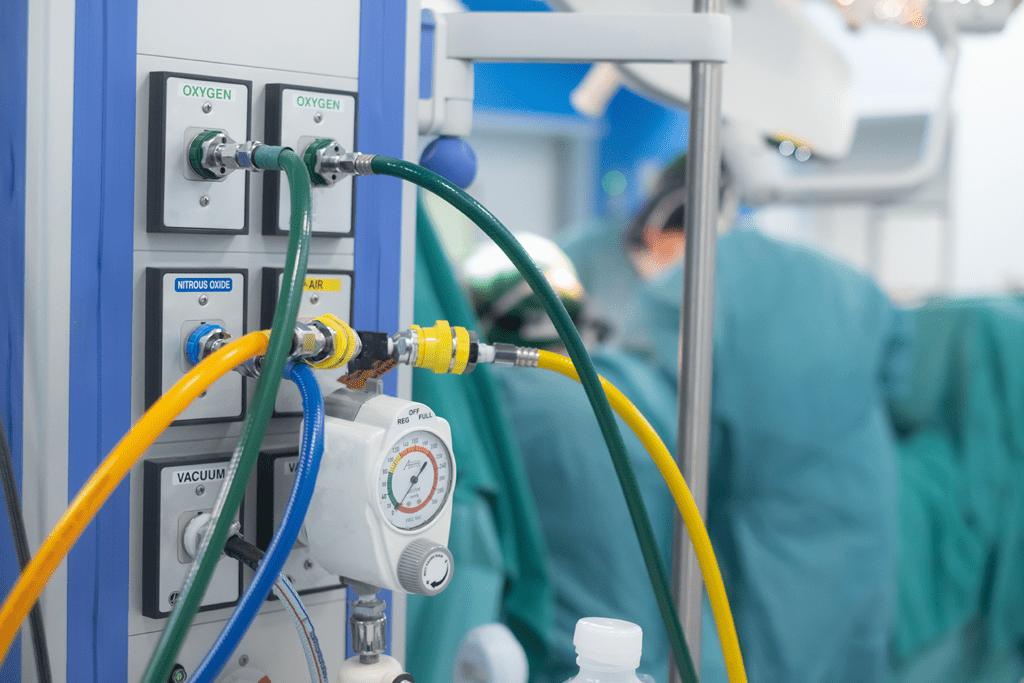
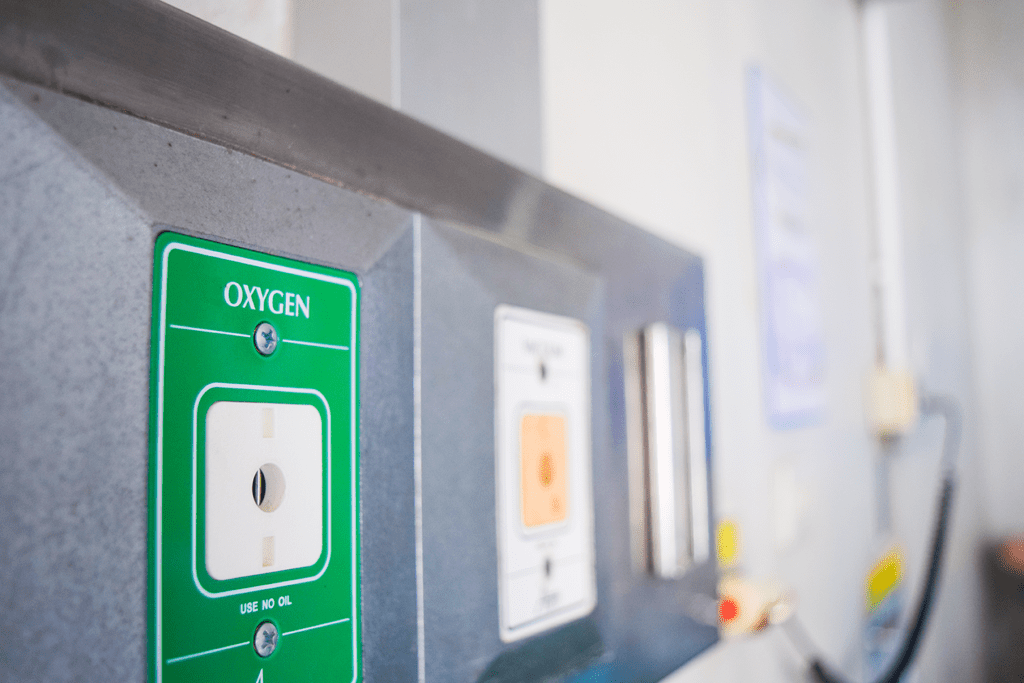
A master alarm panel watches the medical gas supply for the whole facility. An area alarm panel watches one critical piece of it: the gas pressure in a specific patient care area, such as an operating room or an intensive care unit. If pressure falls in that room, the staff working there need to know immediately, and here is the part that surprises people: the facility’s master panel will not tell them. Area alarms stand entirely on their own.
For the engineers and ASC and hospital planners designing or renovating these spaces, getting area alarm coverage right is a code requirement and a patient-safety one. This article explains where NFPA 99, the National Fire Protection Association’s Health Care Facilities Code, requires area alarms, what they monitor, where their sensors must be placed, and how they are tested and setpoint-verified. For the facility-wide side of the picture, see our companion guide to master alarm panel testing.
Where Area Alarms Are Required
NFPA 99 requires an area alarm panel to monitor the gas systems serving two kinds of spaces:
- Anesthetizing locations, meaning any area where moderate sedation, deep sedation, or general anesthesia is administered, such as operating rooms and procedure rooms with anesthesia.
- Critical care areas, including intensive care units and other critical or intensive care spaces.
These are the rooms where a loss of gas pressure can threaten a patient within minutes, which is why each receives its own dedicated, local monitoring rather than relying on the facility-wide panel. NFPA 99 is a risk-based document, and which spaces count as anesthetizing locations depends on how your facility designates and uses them, so the first step in any project is confirming which spaces qualify.
For ASCs and procedure-room build-outs, the practical takeaway is direct: if you are adding or renovating an operating room, or a procedure room where sedation or anesthesia will be used, an area alarm is generally part of the required design, not an optional extra, though the exact requirement depends on the system category, the adopted NFPA 99 edition, and your AHJ. These spaces are typically Category 1 under NFPA 99, and confirming the alarm coverage is part of doing a renovation or build-out correctly.
What They Monitor
An area alarm panel monitors the line pressure of each medical gas and vacuum system serving its area. It activates when the pressure deviates 20 percent from normal operating pressure, whether high or low, and for vacuum it activates on a defined drop in vacuum level.
Now the distinction that defines an area alarm: an area alarm monitors only the area it serves, and it does not communicate with the master alarm panels. Master alarms watch the source equipment and the main lines for the whole building; area alarms watch their own area and signal locally. A pressure problem in one operating room shows up on that room’s area alarm, not on the facility’s master panel.
The implication for design and renovation is important. Because the master panel will not catch an area pressure problem, every space that requires an area alarm needs its own. A missing area alarm is a coverage gap that nothing else in the system fills, which is exactly what should be confirmed when a space is designed, built, or modified. Like all medical gas alarm panels, area alarms provide a cancelable audible signal of at least 80 decibels at 3 feet and a visual indication, and they draw power from the life safety branch of the essential electrical system. The full panel behavior is covered in our guide to master alarm panel testing.
Sensor Placement on the Patient Side
An area alarm is only as accurate as the pressure its sensors actually see, so NFPA 99 is specific about where those sensors go. The guiding principle is that the alarm should reflect the pressure reaching the patient outlets.
For critical care areas, the sensors are installed on the patient, or use, side of each individual zone valve, downstream of the zone (shutoff) valve serving the area. The reason is straightforward: if a sensor sat on the source side, closing the zone valve for maintenance or an emergency would not register, and the alarm would not reflect what is happening at the bedside. Patient-side placement means the alarm watches the gas as it is actually delivered to the area.
Anesthetizing locations carry an added option. NFPA 99 generally allows their sensors to be installed in either of two places: on the source side of a group of anesthetizing-location zone valves on the same branch line, or on the patient side of each individual zone valve. In practice, when each anesthetizing room has its own area alarm, the sensor goes on the patient side of that room’s zone valve. Because the correct choice depends on the design and the NFPA 99 edition your Authority Having Jurisdiction has adopted, sensor placement is something to confirm against the specific layout rather than assume.
Either way, the area alarm is tightly linked to the zone valve: the zone valve isolates the area, and the area alarm sensor watches the pressure on the relevant side of it. Getting that placement right is central to confirming proper alarm coverage during a build-out, and it is one of the things an independent verification checks before the space goes into service.
Testing & Setpoint Verification
Area alarms are tested much like master alarms, with the same crucial distinction between confirming the panel lights up and confirming it will actually warn you.
- Push-button test: Pressing the test button confirms the panel’s audible and visual signals operate. It is a quick routine check performed between inspections.
- Actual activation and setpoint verification: Creating the real condition to confirm the alarm triggers at its true setpoint, the 20 percent pressure deviation, through the actual sensor. How often this is done is set by your documented maintenance strategy, manufacturer guidance, and applicable requirements. Because an activation sets off the alarm in an occupied care area, it is coordinated with clinical staff and performed within the agreed scope.
The reason setpoint verification matters is the same as for master alarms: a push-button test can pass while a failed or miscalibrated sensor would not activate in a real event. Confirming the true setpoint, not just the button, is what shows the alarm will do its job. During a new build-out, area alarms are tested as part of verification before the space is placed into service, and incorrect sensor placement or a missing area panel are common findings, the kind covered in our guides to Joint Commission medical gas compliance and common medical gas system problems. Whatever intervals you set, document them and follow them.
How Compass Cryogenics Helps
Compass Cryogenics helps ASCs, dental and specialty practices, medical office buildings, and hospital planners confirm proper alarm coverage in procedure-room and critical care build-outs. When you build or renovate an anesthetizing location or critical care area, we check that area alarms are present where NFPA 99 requires them, that their sensors are placed correctly for the design, on the patient side for critical care and in a permitted location for anesthetizing rooms, and that they activate at their true setpoints. We check alarm coverage during independent verification of new and modified systems and, within the agreed scope, during routine safety inspections, and we document the results in survey-ready reports organized for your compliance and accreditation records.
Because we work across the system lifecycle, we can also support the installation and upgrades themselves, with verification of that work kept independent of Compass, so a new ambulatory surgery center or procedure room is built and verified correctly the first time. We serve healthcare facilities across New England, the Mid-Atlantic, and select Midwest markets, scheduling around your project to keep disruption to a minimum.
Frequently Asked Questions
Where are area alarm panels required?
NFPA 99 requires an area alarm panel for the gas systems serving anesthetizing locations, where moderate or deep sedation or general anesthesia is administered, and critical care areas such as ICUs. These are typically Category 1 spaces, so adding or renovating one generally means an area alarm is part of the required design, subject to your system category and AHJ, as covered in our guide to planning a medical gas system upgrade.
What does an area alarm monitor?
It monitors the line pressure of each medical gas and vacuum system serving its area, activating when pressure deviates 20 percent from normal or when vacuum drops below its threshold. Importantly, it monitors only its own area. Alarm function is tested, within the agreed scope, during a routine safety inspection.
Do area alarms connect to the master alarm panel?
No. Area alarms are independent and signal locally; they do not communicate with the master alarm panels. Master alarms monitor the source and main lines for the whole facility, while area alarms monitor their specific area, which is why each required space needs its own. Our guide to master alarm panel testing covers the facility-wide side.
Where are area alarm sensors located?
For critical care areas, sensors go on the patient, or use, side of each individual zone valve, so the alarm reflects the pressure delivered to the area. For anesthetizing locations, NFPA 99 generally allows the sensors either on the source side of a group of anesthetizing-location zone valves on the same branch or on the patient side of each individual zone valve. Placement is tied to the zone valve serving the area and should be confirmed against the design.
How are area alarms tested?
A routine push-button test confirms the panel’s audible and visual signals work, while actual activation testing confirms the alarm triggers at its true setpoint, the 20 percent deviation, through the real sensor. Actual activation intervals are set by your documented maintenance strategy, manufacturer guidance, and applicable requirements. These checks are performed during verification and inspection.
Building or renovating an OR, procedure room, or ICU? Compass Cryogenics checks that your area alarms are where NFPA 99 requires them, placed correctly, and activating at their true setpoints, with documented results for your build-out and your accreditation records. Confirm your alarm coverage or request a quote, call us at (888) 833-2796, or drop us a line through the contact form on this page.