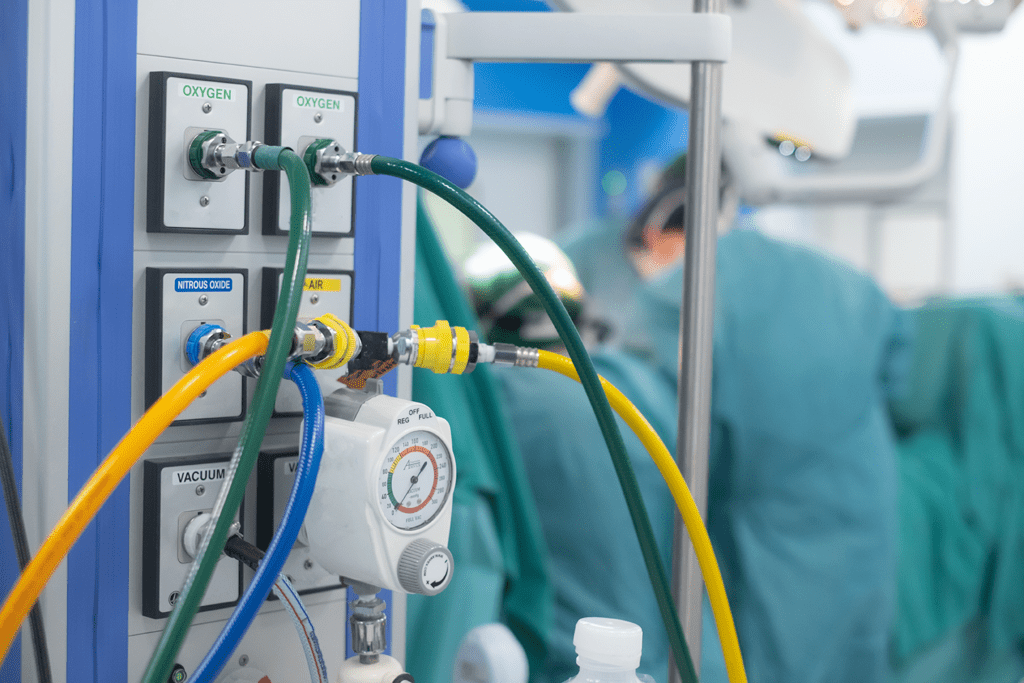

Medical gas systems are the lifeline of any hospital – delivering oxygen, medical air, vacuum suction, and other critical gases to patient areas. When these systems falter, it can jeopardize patient care and safety. That’s why maintaining them and addressing issues promptly (in line with NFPA 99 code requirements) is so important. In this article, we’ll explore five common medical gas system problems and how a qualified medical gas repair service can fix them. The tone is both formal and technical – aimed at hospital compliance officers, biomedical engineers, facilities directors, and healthcare maintenance personnel who need to keep these systems running flawlessly. We’ll also highlight why timely repairs are critical for patient safety and compliance, and how Compass Cryogenics can assist in resolving these issues.
Common Issues in Medical Gas Systems:
- Low Gas Pressure or Leaks – Oxygen pressure drops or gas leaks that cause low supply pressure.
- Alarm System Malfunctions – Faulty master or area alarm panels that fail to alert staff of problems.
- Worn-Out Outlets or Valves – Leaking or broken outlets and valves, raising the question of repair vs. replace.
- Vacuum Pump Failures (Loss of Suction) – Malfunctioning vacuum pumps leading to inadequate suction in the vacuum system.
- Delayed Emergency Repairs or Response – Slow response to system failures or lack of emergency protocols, risking patient safety.
Let’s dive into each problem, examine likely causes, and discuss how a qualified technician would fix it – all while emphasizing the urgency of repairs for NFPA 99 compliance and patient safety.
1. Low Pressure or Leaks – Causes and Solutions
One of the most common issues in medical gas pipelines is low pressure in the system, often noticed as oxygen flow drops or insufficient suction on the vacuum line. Low gas pressure and unexplained supply fluctuations usually indicate a leak or supply problem. Even a small leak in the piping, outlet, or a connection can cause a significant drop in pressure to the overall system. Leaks not only reduce pressure (affecting the performance of ventilators and medical instruments) but can also create safety hazards – for example, a leaking oxygen line poses a fire risk in a high-oxygen environment. Additionally, leaks waste expensive gases; a continuous oxygen leak will literally bleed money and may cost a facility thousands in wasted supply if left unaddressed.
Causes: Leaks can occur at pipe joints, fittings, worn seals, or faulty connections. Over time, vibrations and temperature changes may loosen fittings. Gaskets or O-rings in valves and outlets can degrade. Sometimes, low pressure is simply due to an empty gas source (e.g. a depleted oxygen tank or cryogenic liquid oxygen reservoir) or a malfunctioning regulator that fails to maintain the correct pressure. In vacuum systems, low suction (which is essentially low negative pressure) might be caused by a failing vacuum pump, clogged vacuum lines, or, in the case of “wet” vacuum systems, overfilled collection canisters. In fact, vacuum system performance naturally degrades over time as lines get clogged with debris, leading to low suction issues. This is a serious concern – when surgeons experience poor suction, procedures take longer, increasing infection risk and even adding thousands of dollars per day in OR costs.
Solutions: A qualified medical gas technician will first troubleshoot and locate any leaks or supply issues. Leak detection is typically done with specialized tools (ultrasonic leak detectors or gas analyzers) because traditional soap solutions can be unsafe for oxygen systems. Once a leak is pinpointed – for example, a leaky pipe joint or a worn outlet seal – the technician will isolate that section (using zone valves) and repair it. Repairs might involve tightening connections, replacing faulty components (like a leaking valve seat or outlet cartridge), or re-sealing pipe joints. Compass Cryogenics technicians, for instance, are equipped to perform comprehensive leak detection and repair on medical gas lines. If the low pressure is due to supply depletion or a regulator issue, the fix could be as simple as switching to a backup supply, refilling the tank, or repairing the pressure regulator.
On the vacuum side, vacuum pump failures or clogs require prompt attention. A failing vacuum pump might need an overhaul or replacement of parts such as filters, seals, or oil (for oil-sealed pumps). If the pump has failed entirely, an emergency replacement pump may be installed to restore suction. Technicians may also perform services like cleaning out the vacuum lines (e.g., removing sludge buildup) to improve suction. The key is that any low-pressure scenario – whether on an oxygen, air, or vacuum line – should be addressed immediately. It’s not only about maintaining functionality, but also safety: for example, inadequate oxygen pressure can compromise patients on ventilators, and poor vacuum can disrupt surgeries. Timely repair of leaks and pressure problems safeguards patient care and keeps the system in compliance with NFPA 99’s requirements for continuous gas delivery. In fact, NFPA 99 categorizes medical gas systems as Category 1 systems (for hospital applications), meaning that a failure is likely to cause major injury or death. This underscores the importance of fixing leaks and pressure issues without delay.
How a technician fixes it: To summarize, a certified technician will use leak detection methods to find and fix leaks (replacing gaskets, tightening or re-brazing joints as needed), verify source tank levels and regulators, and test system pressures after the fix to ensure the problem is resolved. After repairs, they will often conduct a leak test and pressure verification per NFPA standards to confirm that the system holds steady pressure within normal range. Regular preventive maintenance – such as annual or semiannual inspections – is crucial to catch leaks early. According to NFPA 99 guidelines, all medical gas outlets (common leak points) in high-use areas should be inspected at least every six months (and annually for all outlets). These inspections will identify leaks or degradation so they can be corrected before causing low-pressure incidents.
2. Alarm Systems Malfunctioning
A technician inspects the internal components of a medical gas alarm panel. Regular testing and maintenance of alarm systems ensure that staff are alerted to issues like pressure drops or empty reserves, as required by NFPA 99.
Alarm systems are the watchdogs of a medical gas network. Master alarm panels (usually located in the maintenance office or continuously monitored location) warn of central supply issues – such as reserve tank low or main compressor failure – while area alarm panels (located in patient care areas like ICUs or operating rooms) alert staff if local line pressure goes out of normal range. When these alarm systems malfunction, it’s a serious problem: staff may not be notified of dangerous situations (like a drop in oxygen pressure or an empty gas cylinder on the manifold), potentially leading to life-threatening delays. For instance, if an area alarm fails to sound when oxygen pressure drops, caregivers might not switch to backup O₂ cylinders in time. Alarm malfunctions can stem from faulty sensors, disconnected or broken wiring, dead backup batteries, or even something as simple as an indicator light or buzzer that has burned out. In some cases, older alarm panels might not interface well with newer equipment or could be mis-programmed, causing nuisance alarms or missed signals.
Causes: Common causes of alarm failure include sensor issues (pressure switches or transducers that no longer read correctly), control module failures, or power supply problems. In some older systems, alarms might be disabled or silenced improperly – alarm fatigue is a known challenge in hospitals, where frequent alarms lead staff to silence or ignore them. In fact, the Joint Commission has identified alarm management as a critical patient safety concern due to incidents of alarms being missed. Another cause is non-compliance with code requirements: NFPA 99 requires specific alarm setups (e.g., at least two master alarm panels in separate locations, with all critical signals monitored). If a facility’s alarm system wasn’t installed or updated per code, some signals might not be monitored at all – essentially a built-in malfunction. For example, a common deficiency is missing area alarms in critical care zonesor improper placement of sensors.
Solutions: The fix for a malfunctioning alarm system starts with testing and verification of all signals. A medical gas service technician will test each alarm condition (for instance, by momentarily dropping pressure or using a simulator to trigger the sensor) to see if the panel receives and annunciates the alarm. NFPA 99 actually mandates periodic testing of master and area alarm panels to ensure all signals (like high/low line pressure, changeover to secondary supply, etc.) are functioning properly. If any alarm fails to trigger, the technician will trace the problem – it could be a defective pressure sensor in the pipeline, a loose wire between the sensor and alarm panel, or a failure in the panel circuitry. The faulty component would then be repaired or replaced. For instance, replacing a bad pressure switch or a circuit board in the alarm panel can restore proper function. Sometimes, simply recalibrating a sensor or updating the panel’s software (for newer digital alarm systems) resolves false alarms or non-responsive alarms.
In cases where the alarm system is obsolete or very unreliable, an upgrade may be recommended. Modern medical gas alarm panels often have self-diagnostic features and better integration with building management systems. A service provider like Compass Cryogenics can repair or upgrade alarm panels as needed to bring the system up to current standards. They will also ensure that your alarm coverage meets NFPA 99 criteria – for example, verifying you have the required two master alarms and that no alarm conditions are “daisy-chained” incorrectly (a practice prohibited by code because it can cause multiple alarms to fail if one connection is lost).
The importance of functional alarms cannot be overstated: failure to respond to an alarm can directly harm patients, as evidenced by FDA reports of alarm-related deaths. Thus, once repairs are done, technicians will test the alarms again and often review alarm response procedures with the facility. Training staff to respond promptly to gas alarms is part of the solution – an alarm means action is needed, whether it’s switching to backups or calling for emergency repair. In summary, keeping alarm systems in working order (through regular testing and timely fixes) ensures that any problem in the medical gas system will be immediately noticed and addressed before it can escalate into a crisis.
3. Worn-Out Outlets or Valves – Repair vs. Replace
Medical gas outlets (the wall or ceiling connectors where equipment like ventilators or anesthesia machines attach) and pipeline valves (such as zone shut-off valves or line valves) are hardware components that undergo wear and tear. Over years of constant use, outlets and valves can become worn out or damaged. You might encounter outlets that start leaking, won’t hold a connector tightly, or have cracked covers. Valves might develop leaks around the stem (packing leaks) or become difficult to turn due to internal corrosion or sediment. These issues not only waste gas (a leaking oxygen outlet can continuously leak gas into the room) but also pose safety and compliance problems. In fact, repairing leaking outlets promptly saves money on wasted oxygen, increases safety, and keeps you compliant with NFPA 99. The big question for maintenance personnel is whether to repair or replace a faulty outlet/valve.
Causes: Outlets have internal springs, seals, and check valves. Over time, the seals (often rubber O-rings) can dry out or crack, causing leaks. The mechanical action of plugging and unplugging hoses can wear down springs and cause the outlet to become loose or partially obstructed. In some cases, physical damage occurs (e.g., someone accidentally yanks on a hose and cracks the outlet or bends the pins in a connector). For valves, lack of routine exercising (periodically opening/closing them) can lead to stiff operation. Mineral deposits or rust can form, especially in medical air or vacuum lines where moisture might be present, causing valves not to seal fully. Another common issue is older legacy equipment – outlets or valves from decades ago might not meet current design standards or might be incompatible with new components, making maintenance harder.
Repair vs. Replace: A qualified technician will assess the extent of wear. If the problem is minor – say an outlet is leaking because of a worn O-ring or a weak spring – a repair kit can often fix it. Manufacturers provide outlet repair kits or cartridge replacements that allow technicians to swap out the internal components without replacing the entire outlet assembly. This is cost-effective and causes minimal downtime; for example, simply popping out the old cartridge and inserting a new one can restore the outlet to like-new performance. Many facilities keep such parts on hand for quick fixes. Valves can sometimes be repaired by replacing seals or packing around the stem, or by tightening fittings, if the valve body itself is still in good condition.
However, if an outlet or valve is severely worn or outdated, replacement is the safer choice. For instance, if an outlet continues to leak even after a kit installation, or if its body is cracked, the technician will recommend replacing it entirely with a new unit. Similarly, a corroded zone valve that doesn’t shut off properly should be replaced to ensure you can reliably isolate zones during emergencies. Modern outlets and valves have improved designs (for example, some new outlet designs allow tool-free replacement of key components to simplify future maintenance). Replacing old units can thus improve reliability and simplify compliance with current codes.
Compliance considerations: NFPA 99 requires that all medical gas outlets and valves are maintained and tested periodically. During these inspections, any subpar components must be addressed. Moreover, the code specifies where valves must be located (e.g., zone valve boxes for each patient area, main line valves, etc.), so sometimes a “problem” is that a needed valve is missing or not up to code. In such cases, adding or upgrading valves is necessary for compliance. Compass Cryogenics, for example, performs valve replacements or upgrades and even installs additional valves to meet NFPA 99 requirements. If your facility has an older piping system, a compliance review might reveal you need to add a zone shut-off valve that wasn’t required when the building was first built – this is a proactive “repair” to your system’s design to enhance safety.
When deciding repair vs. replace, safety and reliability come first. A seasoned technician will opt for replacement if there’s any doubt about the component’s integrity. The downtime for replacing an outlet or valve is usually minimal (often it can be done in a brief planned shutdown of that zone, or even with gas flowing if there are secondary checks to prevent full depressurization). Afterward, the new component will be leak-tested and verified. The end result is a system that holds pressure without leaks and operates smoothly. By investing in repairs or replacements of worn parts, you prevent bigger failures down the line and maintain compliance. And as a bonus, timely fixes extend the lifespan of your overall system and reduce long-term costs of operation.
4. Emergency Repair Procedures and Response Time
Even with diligent maintenance, emergencies can happen – a contractor accidentally cuts a pipe, a sudden compressor failure halts your medical air supply, or a major leak erupts. In these critical moments, the speed and effectiveness of the response can make all the difference. Hospitals must have emergency repair procedures and contingency plans in place to handle medical gas system failures. In fact, regulatory bodies like The Joint Commission require healthcare facilities to plan for utility system disruptions (including medical gas and vacuum) and have a process to manage and respond to such events. Timely response is not just about fixing equipment; it’s about protecting patients who depend on these life-supporting systems.
Emergency protocols: A typical emergency protocol for a medical gas outage or failure will include steps like: switching to backup sources of gas, isolating the problem area, and notifying both clinical staff and technical experts immediately. For example, if the central oxygen supply fails or leaks, staff might open emergency oxygen cylinders (kept in reserve for such events) to supply critical patients. If a vacuum pump fails (loss of suction), portable suction machines might be brought in as a temporary measure while the main system is addressed. Zone valves are closed to stop a leak from flooding a whole wing with gas. Meanwhile, the facilities or biomedical engineering team should contact a certified medical gas repair service right away. Many providers, including Compass Cryogenics, offer 24/7 on-call emergency repair services (with technicians on call during off-hours) to ensure help is available within hours or even minutes of a crisis. The goal is to minimize downtime of the system. A well-prepared facility will also have readily accessible information for emergency responders – like pipeline schematics, valve locations, and contact numbers – so that nothing is wasted when every minute counts.
Response time matters: In an emergency, time is of the essence. For instance, consider a major leak in an oxygen main line – every second, oxygen is not only being lost but potentially creating a hazardous environment. The faster a technician can locate and patch the leak or reroute the supply, the faster normal operations can resume safely. NFPA 99 emphasizes having redundancy and quick shutdown capabilities to allow maintenance or emergency isolation of problems . For example, as mentioned earlier, the code requires at least two sources (like two compressors for air, or two vacuum pumps) so that if one fails, the other can carry the load. But if you’re in a situation where one failed and the backup didn’t kick in (or was under maintenance), the hospital could lose a critical utility. This is why emergency drills and contingency planning are often practiced. A process must be in place to rapidly authorize emergency repairs – sometimes bypassing the usual paperwork – to get work started immediately. Hospital safety committees and compliance officers should ensure that emergency contingency plans are documented and known to staff.
From the service provider’s side, companies like Compass Cryogenics pride themselves on fast response and quick turnaround for repairs. When they receive an emergency call, certified technicians arrive with the necessary equipment (portable reserve manifolds, spare parts, etc.) to tackle common failures. If it’s a pipeline breach, they can perform a temporary fix or install a bypass to restore flow, then permanently repair the pipe once the situation is stabilized. If a main supply like a bulk oxygen system fails, they coordinate with gas suppliers for urgent deliveries or switchovers. The response time can literally save lives – for example, restoring oxygen supply before patients deplete the O₂ in their backup tanks.
Why timely repairs are critical: As we’ve reiterated, medical gas systems are categorized as high-risk systems because lives depend on them. Timely repairs mean patient care continues with little or no interruption. Swift action also ensures compliance with regulations; a prolonged outage or unsafe workaround could put the facility in violation of NFPA 99 or Joint Commission standards. On the flip side, delayed repairs can turn a minor fault into a major disaster. A small leak that isn’t fixed could grow or trigger a fire if ignited. A slow vacuum decline could lead to an emergency mid-surgery, whereas fixing it when first noted (perhaps during a routine inspection) would prevent that scenario. Proactive, timely intervention “helps maintain uninterrupted patient care and ensures that facilities can operate at peak efficiency,” as Compass Cryogenics notes – this approach “enhances safety and compliance” and even extends equipment life by reducing strain. In summary, having robust emergency procedures and a reliable team to call is an essential part of medical gas system management. Hospitals should never be caught off guard; planning for the worst and responding quickly ensures the best outcomes.
Lead generation angle: If reading this has you thinking about your own facility’s preparedness, it may be wise to consult with experts. Compass Cryogenics, as a specialized medical gas repair service provider, offers not only routine maintenance and inspections but also rapid emergency response. We help healthcare facilities create maintenance plans, perform NFPA 99 compliance checks, and stand ready 24/7 for urgent repairs. The peace of mind that comes from knowing you have a team of qualified professionals on call is invaluable. Patient safety, legal compliance, and operational continuity are all on the line when it comes to medical gas systems – and timely expert repairs are the best insurance against disaster.
Frequently Asked Questions (FAQs)
The duration of a repair can vary widely depending on the issue. Minor repairs – like fixing a small leak at an outlet or replacing a faulty alarm sensor – can often be completed in an hour or two by a trained technician, sometimes without fully shutting down the system. Major repairs – such as replacing a large section of pipeline, swapping out a vacuum pump, or repairing a manifold – might require a planned shutdown and could take several hours or more. In emergency situations, the focus is on quickly implementing a temporary fix (for example, isolating a leak and switching to a backup supply) to restore service, and then performing the permanent repair once patients are safe. A professional medical gas repair service will strive to minimize downtime; often repairs are done after-hours or in coordinated intervals to avoid disrupting patient care. Remember, safety can’t be rushed – technicians will test the system after fixing it to ensure everything is working and up to code before declaring the repair complete.
Medical gas systems must be serviced by qualified professionals, typically those with specific certifications. In the U.S., technicians certified under ASSE Series 6000 (such as ASSE 6010 for installers, 6040 for maintenance personnel, and 6030 for verifiers) are authorized to work on these systems. NFPA 99 and other regulations require that any installation or repair that opens the gas pipeline (a “breach” of the system) be tested and verified by a certified medical gas verifier (ASSE 6030) before returning to service. In practical terms, this means your in-house biomedical or facilities staff can handle some minor repairs if they have an ASSE 6040 certification (medical gas maintenance technician). For example, replacing a faulty outlet front can be done by a trained hospital maintenance employee and then tested in-house. However, more extensive work – like cutting into pipelines, replacing primary valves, or altering the system – typically requires a higher level of certification and third-party verification. It’s always best to use experienced and certified medical gas contractors for repairs to ensure compliance and patient safety. These experts will also provide proper documentation of the repair and testing, which is important for regulatory compliance.
Delaying repairs is dangerous and costly. Even minor issues can escalate quickly in a medical gas system. For instance, a small leak left unrepaired could become a large leak, potentially causing a sudden loss of oxygen supply or creating a fire hazard if the area becomes oxygen-enriched. Low-level problems like a slowly weakening vacuum pump could suddenly fail at the worst time (during surgery), forcing emergency measures. From a patient safety perspective, any unrepaired fault means patients are at risk of suboptimal care – think of patients not getting enough oxygen due to a pressure drop, or a critical alarm not sounding when a problem occurs. There’s also a compliance risk: hospitals are required by NFPA 99 and accrediting bodies to maintain these systems; an unresolved issue could lead to citations during inspections or even a shutdown of an affected unit if deemed unsafe. Financially, delays can increase the cost of repair – a controlled fix now might turn into an extensive overhaul later if the problem worsens. Additionally, leaks waste expensive gases and put extra load on equipment (a compressor working overtime to compensate for a leak will wear out faster). As one example, addressing issues promptly through a proactive approach enhances safety and compliance and also extends the lifespan of equipment, reducing long-term costs. In short, timely repairs are always the best course of action to avoid compounding risks.
In an emergency (like a sudden loss of gas pressure, major leak, or equipment failure), follow your facility’s emergency protocol immediately. Key steps usually include:
• Alert appropriate staff and call for help: Inform clinical staff on the affected units so they can implement backup measures for patient care (for example, switching patients to portable oxygen cylinders or manual ventilation if needed). Simultaneously, contact your medical gas service provider’s emergency line for immediate repair response. Providers like Compass Cryogenics have on-call technicians who can be dispatched rapidly.
• Activate backup systems: Most hospitals have emergency reserves – e.g., secondary oxygen cylinders/manifolds that can be opened if the primary supply fails, or duplicate vacuum pumps that kick in if one fails. Make sure those have engaged; if not, manually activate backups. Portable equipment (like portable suction machines or oxygen concentrators) can be deployed to critical areas as a stopgap. Healthcare facilities are required to have contingency plans and backup equipment readily available to avoid disrupting patient care tri-techmedical.com.
• Isolate the problem: If a pipeline is leaking, use zone valves to shut off that section (e.g., close the zone valve for a ward if a outlet in that ward is ruptured) to prevent further gas loss and allow the rest of the facility’s system to remain operational. If a specific piece of equipment (like a compressor or pump) failed, ensure it’s taken offline if the backup has taken over.
• Ensure patient safety during the outage: Clinicians should closely monitor patients during the disruption. This might involve moving critical patients closer to backup supply sources or even considering temporary transfers if an entire system (like all medical air) is down for an extended period.
• Coordinate with the repair team: When the repair technicians arrive, provide quick access to mechanical rooms, schematics, and any information they need. They will work to fix the issue – whether it’s repairing a leak, replacing a blown gasket, or swapping in a spare part – as rapidly as possible. Meanwhile, hospital staff should continue executing the contingency plan to care for patients.
After the emergency, conduct a debrief and document the event. Ensure that any interim solutions (like used backup cylinders) are replenished and systems are fully tested before returning to normal operations. It’s also wise to update your emergency procedures based on lessons learned. Being prepared and responding swiftly is crucial – as the Joint Commission notes, having a process in place for utility system disruptions is essential to maintaining safe patient care.
Ensuring code compliance is an ongoing process that involves regular inspections, maintenance, and documentation. Here are some key practices:
- Follow NFPA 99 maintenance schedules: NFPA 99 (Health Care Facilities Code) provides guidance on how often to test and inspect various components. For example, as mentioned, outlets should be checked annually (more frequently in high-use areas), alarm systems should be tested periodically, and source equipment like compressors or vacuum pumps should have scheduled maintenance. Adhering to these schedules and keeping records of each inspection/maintenance task will keep you on track.
- Perform regular risk assessments: NFPA 99 uses a risk-based approach, categorizing systems by the risk to patients if they fail. Regularly assess if any changes in your facility (like new medical departments or equipment) have introduced new risks or if your current category classification is still appropriate. Ensure you have the required redundancies and safety measures for your category (e.g., Category 1 systems need backups for critical components).
- Use certified professionals: When installations or major modifications are needed, use ASSE-certified installers and verifiers who will ensure the work meets code. After any repair or change that “breaches” the pipeline, have a 6030-certified verifier test the system for leaks, cross-connections, and functionality before putting it back in service. This third-party verification step is a code requirement in many jurisdictions and is important for patient safety.
- Keep documentation: Maintain a medical gas maintenance log, as well as up-to-date certificates of inspection and verification. This includes annual medical gas inspection reports, alarm test logs, valve exercise logs, etc. Not only does this prove compliance during audits, but it helps track when service is due.
- Train staff and stay updated: Ensure that your maintenance and clinical staff are trained in the basics of the medical gas system – for example, they should know where zone valves are and how to shut them in an emergency, and whom to call for service. Stay informed about updates to codes; NFPA 99 is revised periodically (every few years) and local authorities may adopt new editions. For instance, the 2021 edition placed more focus on operational management of med gas systems. Being proactive about new requirements (like changes in testing frequency or new technology standards) will keep you ahead of compliance issues.
- Partner with experts: Many healthcare facilities partner with specialized service companies (like Compass Cryogenics) for compliance programs. These experts can perform routine medical gas safety inspections, NFPA 99 compliance reviews, and verification tests. They can identify any code deficiencies (such as missing alarms or valves), recommend fixes, and ensure all work is documented properly. By having such a program, you greatly reduce the chances of an oversight that could lead to non-compliance.
In summary, maintaining compliance is about vigilance and regular care. If you consistently inspect, promptly repair issues, and document everything, you’ll not only meet the letter of the law but also create a safer environment for patients and staff. Compliance isn’t a one-time task – it’s woven into the day-to-day stewardship of your medical gas systems.