

For many small healthcare facilities, a comprehensive medical gas inspection may fall in the low thousands, often around $2,000 to $4,000 depending on system size, location, scheduling, and scope. Very small systems may cost less, while larger facilities cost more. That is the short answer, and we lead with it because most people land on this page wanting a number, not a runaround.
The longer answer is that the price depends almost entirely on how many components we test. A two-chair dental practice and a multi-floor surgery center may both maintain piped medical gas systems, but the inspection scope is very different: one has a handful of outlets and a single alarm panel while the other has hundreds of outlets, multiple zone valves, and a full source plant. The work scales with the system.
If you manage a dental practice, a veterinary clinic, an ambulatory surgery center (ASC), or a medical office building, this article is for you. We will walk through what actually drives the price, clear up the confusion between an inspection, a verification, and a certification (a distinction that makes quotes hard to compare), explain what a thorough annual inspection typically includes, and offer some practical ways to budget for a smaller facility.

What Drives Inspection Pricing
Almost every honest medical gas inspection quote comes down to scope and labor. The more there is to test, and the harder it is to reach, the more time it takes. Here are the factors that move the number:
Number of tested components: This is the big one. The number of outlets, inlets, zone valves, alarm panels, and source components included in the inspection scope is usually the largest pricing factor. A facility with a few patient rooms sits at the low end of the range. High outlet, alarm, and valve counts push the cost up because each one adds testing time.
System complexity and layout: Multiple buildings, several floors, or systems serving different gases (oxygen, medical air, nitrous oxide, vacuum) all add scope compared with a single small pipeline.
Accessibility: Valves above ceilings, equipment crowded into tight mechanical rooms, or outlets blocked by furniture slow the work down and can add to the time on site.
Scheduling: A daytime inspection that fits normal hours costs less than after-hours or weekend work scheduled around a full surgical calendar.
Condition of the system: If the inspection turns up leaks, worn outlets, or stiff valves, the repairs add cost, but handling them on the same visit is almost always cheaper than a separate return trip. (For a sense of what commonly needs fixing, see our guide to common medical gas system problems.)
Location and travel: Distance from the nearest technician can factor into the quote.
Because of all this, the only truly accurate number is a quote based on your specific component count. The $2,000 to $4,000 range is a useful planning figure for a small facility, but think of it as a starting point, not a fixed price.
Inspection vs. Verification vs. Certification
Here is where a lot of confusion (and a lot of mismatched quotes) comes from. These three words get used interchangeably in the industry, but they mean different things and carry different price tags.
Annual inspection: This is a recurring evaluation of an existing, in-service medical gas system. It assesses the condition and performance of the components included in the inspection scope against the applicable provisions of NFPA 99, the National Fire Protection Association’s Health Care Facilities Code, along with manufacturer recommendations, facility policies, and accreditation expectations. It is what most facilities mean when they ask about “annual inspection cost,” and it is the recurring, documented testing accreditation surveyors expect to see. You can read more about what this involves in our overview of what to expect in a medical gas safety inspection.
Verification: This is a one-time test performed by an independent, ASSE 6030 certified verifier on a new system, an addition, a renovation, a temporary installation, or a repaired line, before it is put into service. NFPA 99 requires it, and the verifier has to be independent of the company that did the install. It documents that the tested installation satisfies the applicable verification requirements at the time of testing. It is not a recurring annual cost, and it does not endorse the design or guarantee future performance. Our medical gas verification guide covers when and why it is required.
Certification: This is where language gets loose. As we explain in Certified vs. Verified, people get certified and systems get verified. A technician holds an ASSE certification; a system is verified through testing. The common phrase “annual O2 certification” really refers to the annual inspection and testing of the oxygen system, not a certificate that guarantees the system will not fail. What you are paying for is objective testing and the documentation that proves it, confirmed at the time of testing.
Why does this matter for your budget? Because an inspection and a verification are different scopes with different costs. When you compare quotes, make sure you are comparing the same service. A one-time verification of a newly built system is not the same line item as your recurring annual inspection, and mixing them up is a common reason two “inspection” quotes look wildly different.
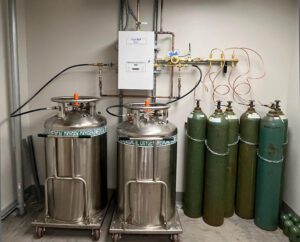
What’s Included in a Medical Gas Annual Inspection
When you pay for an annual inspection, you are paying for a thorough, documented evaluation of the medical gas and vacuum components included in the agreed inspection scope, tested against the applicable NFPA 99 provisions and your facility’s own policies. A well-scoped inspection covers:
Outlets and inlets: Each gas outlet and vacuum inlet in scope is checked for correct pressure, adequate flow, leaks, and proper latching of connected equipment, along with correct labeling and color coding. Periodic purity and contaminant testing can also be included to confirm gas quality at the point of use. (Cross-connection testing is a verification-stage test for new or modified piping, so it is not normally part of a routine annual inspection.)
Zone valves: Zone shutoff valves are evaluated for clear access, condition, and accurate labeling, so staff can isolate an area in an emergency. Functional operation is tested when it is included in the scope and safely coordinated with your facility, since closing a valve can interrupt service. (Our article on medical gas zone valve inspection goes deeper on the NFPA 99 access and labeling rules.)
Alarm systems: Master, area, and local alarm panels are tested by simulating fault conditions to confirm they signal both audibly and visually when pressure drops or a source changes over.
Source equipment: Manifolds, bulk supply, medical air compressors, and vacuum pumps are inspected to confirm they are operating within parameters and that backup and changeover systems work.
Labeling throughout: Pipes, valves, and outlets are checked for the clear, accurate identification that both surveyors and emergency responders rely on.
Documentation: Every test, result, and date is recorded, and you receive digital and printable, survey-ready inspection reports documenting the components tested, the results, any deficiencies, and the corrective actions taken. As surveyors put it, if it isn’t documented, it didn’t happen.
Where we find a fixable issue during the visit, our technicians carry common parts and, with your authorization, perform “as-we-go” repairs and re-labeling, so a finding becomes a closed item rather than a follow-up work order. Parts and repair labor may be additional unless they are included in the proposal, and work that requires a shutdown or subsequent verification is scheduled separately. For the full survey picture, our guide to Joint Commission medical gas compliance is a good companion read.
Budgeting for Small Facilities
If you run a dental office, a veterinary clinic, an ASC, or a medical office building, your system is smaller, which means your inspection sits at the lower end of the range. It also means a few simple steps can keep the cost predictable and the quote easy to compare:
Know your component count. A rough inventory of your outlets, inlets, zone valves, and alarm panels lets a provider give you an accurate quote quickly, and it helps you compare bids on equal footing.
Schedule it annually and on a routine. A planned annual inspection is easier to budget than a scramble before a survey, and consistent scheduling helps you avoid lapses that draw findings.
Fix small issues on the same visit. Handling minor leaks or worn outlets during the inspection is almost always cheaper than a separate trip.
Keep your documentation organized. Having prior reports and your component list on hand reduces time on site and keeps your records survey-ready.
Ask for an itemized quote. A transparent quote that shows what is being tested makes it obvious whether you are comparing an inspection to an inspection, or accidentally to a one-time verification.
Right-sizing matters here. A smaller facility should not pay for testing components it does not have, but every installed component should receive testing appropriate to the system category, its clinical use, and the agreed scope. If you want to confirm which NFPA 99 requirements apply to your setting, our medical gas risk assessment guide explains how systems are categorized by risk.
How Compass Cryogenics Helps
At Compass Cryogenics, we quote medical gas inspections based on your actual component count, not a one-size-fits-all package, so the number you see reflects the system you have. Our ASSE-certified medical gas personnel evaluate the components included in the agreed scope, document results at the component level, complete authorized minor repairs when practical, and deliver digital and printable, survey-ready reports organized for your compliance and accreditation records.
We scale our inspection programs from small specialty practices to hospitals and multi-building healthcare campuses, so dental practices, veterinary clinics, ASCs, and medical office buildings get the same careful testing and documentation as a large health system, priced for the system they actually have. We schedule around your clinical hours to keep disruption to a minimum, and when independent verification is required for new or renovated work, we can provide or coordinate qualified ASSE 6030 verification, subject to project scope and independence requirements.
Frequently Asked Questions
How much does a medical gas annual inspection cost?
For a small facility with only a few patient rooms, an inspection often falls in the low thousands, with $2,000 to $4,000 as a useful planning range, and larger systems with higher outlet, alarm, and valve counts cost more because there is more to test. The most accurate number comes from a quote based on your specific component count. See what an inspection includes to understand what that price covers.
What is the difference between an annual inspection and a verification?
An annual inspection is a recurring evaluation of an existing, in-service system’s condition and function against the applicable requirements within the inspection scope. A verification is a one-time test by an independent ASSE 6030 verifier on a new, modified, or repaired system before it goes into service. They are different scopes with different costs, which is why it helps to know exactly which one a quote is for. We dig into the related terminology in Certified vs. Verified.
Why are some inspection quotes higher than others?
Usually because they cover different scopes. A higher quote may reflect more components, multiple buildings or floors, after-hours scheduling, or repairs bundled into the visit. A lower quote may be testing fewer components or may actually be a different service. Asking for an itemized quote is the easiest way to compare bids fairly.
How often is a medical gas inspection required?
NFPA 99 and Joint Commission requirements leave the exact intervals to your facility, set by manufacturer guidance, facility policy, operating experience, and a risk-based assessment, along with any state or Authority Having Jurisdiction requirements. An annual comprehensive inspection is the common standard, often with more frequent checks of critical items. Our guide to Joint Commission medical gas compliance explains how the requirements work.
Does a small dental or veterinary clinic really need a full annual inspection?
Regular inspection is prudent for any piped medical gas system, but the exact requirements and frequency depend on the facility, system category, clinical use, adopted rules, accreditation, manufacturer guidance, and the Authority Having Jurisdiction. For dental practices and ASCs, requirements vary by state, accreditor, and sedation practice. Veterinary facilities are not governed by NFPA 99 the way human healthcare facilities are, though many use it as a voluntary safety benchmark. The scope is smaller, so the cost is lower, but it is the same kind of careful, documented testing. A quick risk assessment can confirm what applies to your facility.
Want a real number for your facility instead of a range? Compass Cryogenics will give you a transparent quote based on your actual component count. For the most accurate pricing, send us your facility address and an approximate count of outlets and inlets, alarm panels, zone valve boxes, source equipment, buildings, and floors. If you do not have an inventory, we can help you establish one. Request a quote or schedule an inspection, call us at (888) 833-2796, or drop us a line through the contact form on this page.