Compass Dental Gas Service is proud to announce our endorsement from the Michigan Dental Association. As a company with more than 500 clients in 17 states, we are uniquely positioned to provide your practice with comprehensive dental anesthetic gas services.
Services
- Dental Gas Risk Assessment and Compliance Review.
- Dental Gas Safety Inspections.
- Flexible Line/Hose Inspections.
- Dental Gas System Design, Installation, and Upgrades.
- Dental Gas System Maintenance and Repairs.
- Dental Gas System Installation Verifications.
- Waste Anesthetic Gas Testing.
- Trace Gas Monitoring Badges.

Discounts:
- 15% off all services for MDA members.
- 1 free Nitrous Oxide monitoring badge for any client who engages Compass for any service (includes lab fee and report – $80 value).
- 15% off any order of additional monitoring badges.
- 15% off parts for repairs of outlets, inlets, and equipment.
Compass Service Fees:
- Standard ½ day rate (up to 4 hours): $740 – 15% = $629 for MDA Members.
- Standard 1 day rate (up to 8 hours): $1,480 – 15% = $1,258 for MDA Members.
- Emergency/After-hours rate: $1,850 per day – 15% = $1,572.50 for MDA Members.
- Weekend/Holiday rate (time + 1/2): $277.50/hour – 15% = $236/hour for MDA Members.
- Rates include travel to and from the work site.
- Consulting and construction projects are bid-exclusive.
Working with Compass Cryogenics is a simple process:
- Contact our main office at our toll-free number: 888-833-2796 or at info@compasscryo.com.
- Set up an account with our office staff or your regional account manager.
- Schedule an appointment for assessment/evaluation of existing systems or problems/issues.
- The technician will arrive, conduct a survey, and provide an immediate quote for emergency repair. Or provide a follow-up assessment as required.
- Regular inspections follow a standardized inspection protocol with formal reports provided to the client with deficiencies, comments, and repairs required.
- If requested, Compass technicians can repair items as they go along with a regularly scheduled inspection.
- If parts are required that the technician does not have, a return appointment will be scheduled once the parts have arrived.
- Billing can be managed by ACH, check, or payments can be made on any major credit card.
All work conducted by Compass technicians can be conducted in locations that are not in service, during off-hours, breaks, or at any time deemed by clients to be the least impactful to regular patient care and operations.
Some Facts About Nitrous Oxide (N2O)
Overexposure to nitrous oxide (N₂O) in dental settings has been a recognized occupational hazard, particularly for dental professionals who are frequently exposed during the administration of sedation. Here are some key statistics and facts about nitrous oxide exposure in dental environments:

Prevalence of Exposure
- The National Institute for Occupational Safety and Health (NIOSH) estimates that over 200,000 healthcare workers, including dentists, hygienists, and dental assistants, may be exposed to waste anesthetic gases such as nitrous oxide in the U.S. alone.1
- Dental professionals are among those most frequently exposed due to the routine use of N₂O for conscious sedation.2
Occupational Exposure Limits
- NIOSH recommends that nitrous oxide exposure not exceed 25 ppm (parts per million) as a time-weighted average (TWA) throughout anesthetic administration.3
- However, exposure levels in dental offices without effective scavenging or ventilation have been measured at 400–1,000 ppm, greatly exceeding safe limits.4
Study Examples
- A NIOSH field study found that over 70% of dental offices surveyed had nitrous oxide levels above 25 ppm when scavenging systems were either missing or not properly maintained.5
- A 2014 study in the Journal of Occupational Medicine and Toxicology showed significantly higher urinary nitrous oxide metabolites in exposed dental workers, indicating systemic absorption.6
Scavenging System Effectiveness
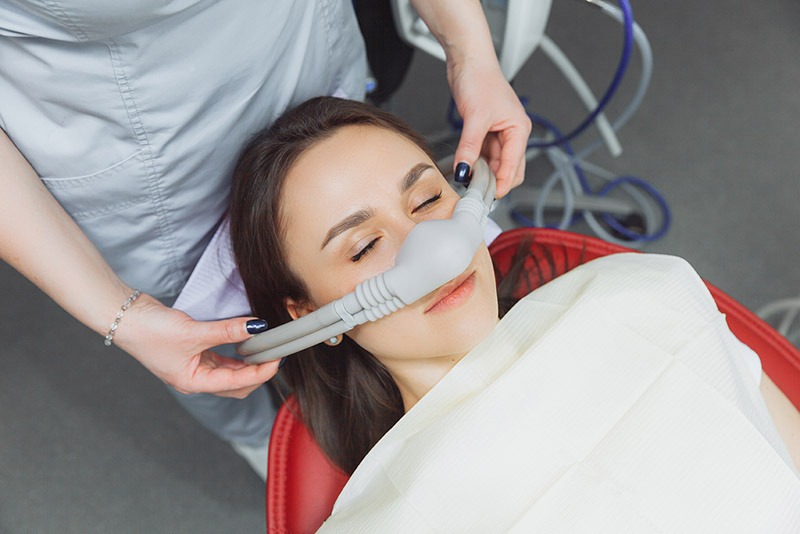
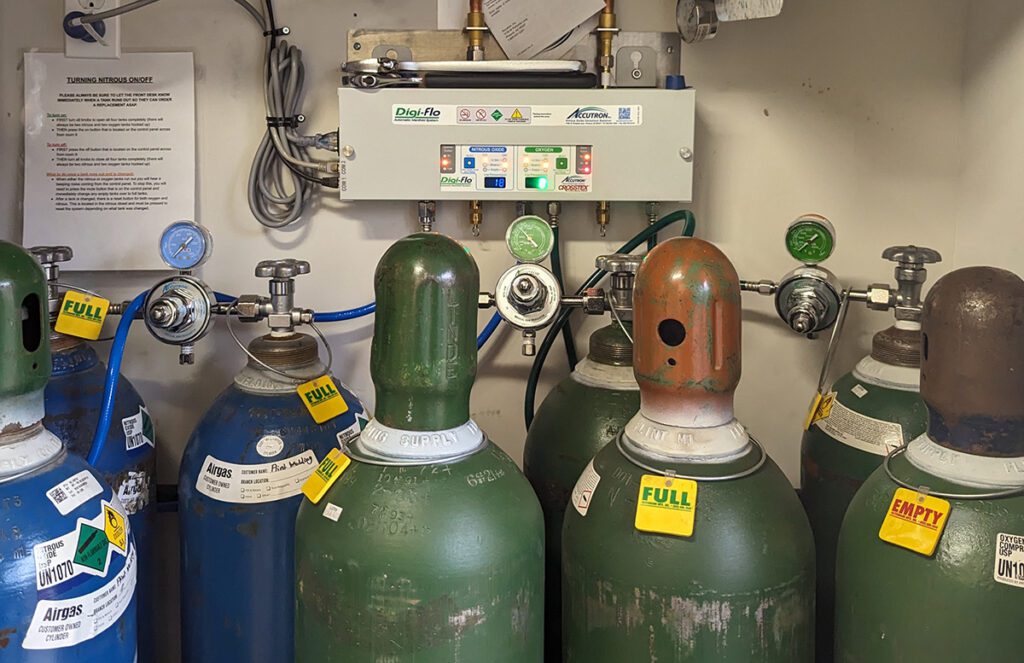
Properly functioning scavenging systems can reduce ambient N₂O levels by up to 90%, especially when combined with: 7
- Adequate room ventilation
- Routine maintenance
- Correct mask fit
Best Practices and Regulations
Safety agencies, including NIOSH, OSHA, and the ADA, recommend the following protocols for minimizing nitrous oxide exposure: 8
- Use of active scavenging systems
- Air monitoring programs to assess ambient N₂O levels
- Employee training on risks and equipment use
- Regular inspection of delivery and evacuation systems
Compass Dental Gas Service can be your long-term partner for inspection, maintenance, and training for your dental gas anesthesia systems. Reach out to us today at 888-833-2796 or info@compasscryo.com.
References:
- NIOSH. (1994). Controlling exposures to nitrous oxide during anesthetic administration. DHHS (NIOSH) Publication No. 94–100.
- American Dental Association. (2018). Guidelines for the Use of Sedation and General Anesthesia by Dentists.
- NIOSH Recommended Exposure Limit (REL): 25 ppm as a TWA.
- Clark, M. S., & Brunick, A. (2015). Handbook of Nitrous Oxide and Oxygen Sedation (4th ed.). Elsevier.
- NIOSH Health Hazard Evaluation Report: HETA 93-1031-2494 (1994).
- Bozkurt, G., Altun, I., & Yildirim, Z. (2014). Evaluation of occupational nitrous oxide exposure in dental clinics using urinary nitrous oxide analysis. J Occup Med Toxicol, 9(1), 27.
- OSHA. (2002). Anesthetic Gases: Guidelines for Workplace Exposures.
- ADA Council on Scientific Affairs. (2007). Occupational Hazards in Dentistry: Nitrous Oxide Guidelines.